Basement Waterproofing in Doylestown, PA
Doylestown Borough is one of the oldest continuously built-up communities in Bucks County, and you can see it in the foundations. Walk down State Street or through the neighborhoods off Route 202 and you’re looking at homes that predate modern construction standards by a century or more. That history is part of what makes Doylestown special, and it’s also why so many basements here lose the fight against water. At Pressman Home Services, we’ve spent more than 20 years working on foundations like these, and basement waterproofing in Doylestown takes a different playbook than a 1995 development home in a neighboring township.
A large share of homes in Doylestown Borough and the surrounding area were built between the 1870s and 1930s, so many foundations are now 80 to 140+ years old. When these homes went up, foundation waterproofing as we know it didn’t exist. Builders used stone rubble set in lime mortar or clay block, both naturally porous. The goal was structural support, not moisture control.
Then there’s the soil. Much of Bucks County sits on heavy, clay-rich soil that drains slowly. After a soaking rain, that clay holds water against foundation walls for days rather than hours. In a newer poured-concrete foundation with footing drains, that’s a nuisance. In a 100-year-old stone or block foundation, it becomes steady seepage that shows up as damp walls, musty air, staining and spalling. Lasting work has to account for both the age of the wall and the soil pressing on it.
Stone, Block and Poured Concrete Foundations
Not every Doylestown basement fails the same way, because they aren’t all built from the same material. Before we recommend anything, we identify which of three foundation types a home has, because each lets water in differently.
Stone Rubble Foundations
Common in the borough’s oldest sections, stone foundations usually leak through the mortar joints rather than the stone. As lime mortar ages and erodes, it leaves small channels that groundwater follows straight inside. Treating the face of the wall without dealing with the water behind it only delays the problem.
Clay Block and Cinder Block Foundations
Typical of early- to mid-20th-century construction, block is absorbent by nature. It soaks up moisture, and its hollow cores can fill with water under sustained pressure from saturated clay. Over time, block walls can crack or bow, so these foundations need a plan that relieves pressure, not just surface dampness.
Poured Concrete Foundations
Found in Doylestown’s newer homes and some renovated properties, poured concrete is the most water-resistant of the three but not immune. It usually fails at hairline cracks that form as the concrete cures and settles, and at the joint where the wall meets the floor.
All three types can sit within a few blocks of each other here, which is why a one-size-fits-all sales pitch is a red flag. Our process always starts with what your wall is actually made of.
Interior Drainage System Installation for Doylestown Basements
For most stone and block foundations in the borough, interior waterproofing is the most reliable long-term fix. Instead of trying to stop water at the wall, it gives the water a controlled path out of the house.
How the System Is Installed
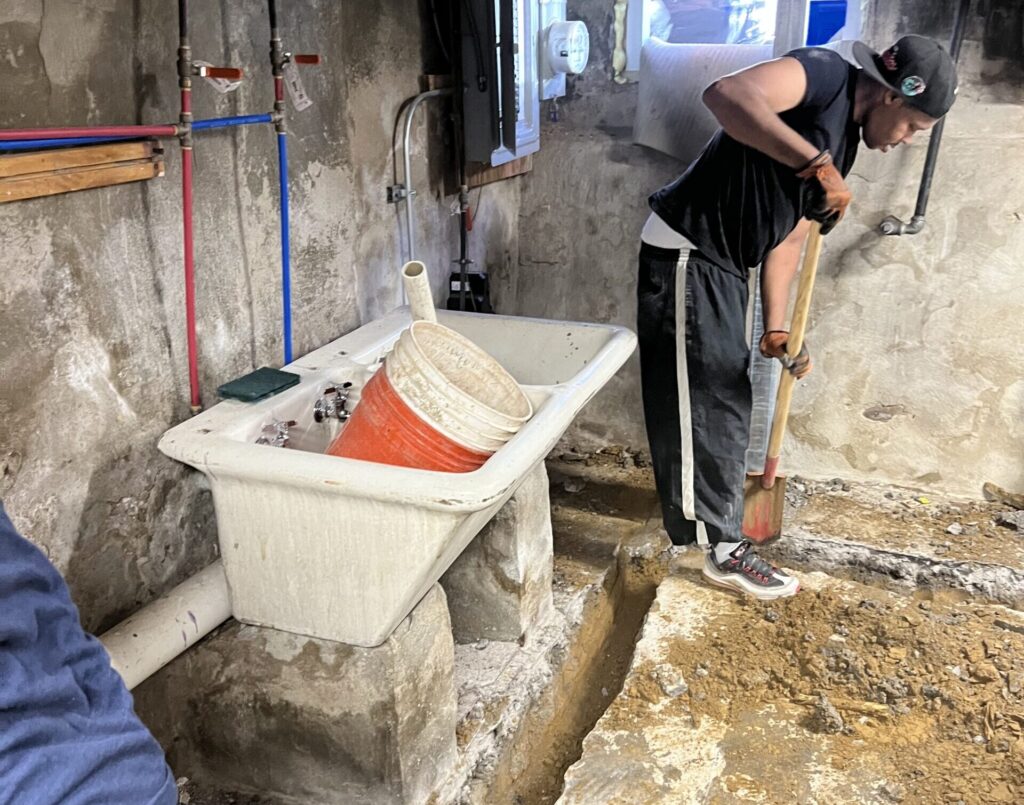
We cut a narrow channel in the concrete floor along the basement perimeter, dig down to the footing, and set perforated drain pipe in a bed of clean stone. Water that seeps through the walls or rises from under the slab collects in the pipe instead of on your floor. The pipe slopes to a sump basin, and a properly sized pump discharges the water outside and away from the foundation. Finally, we pour new concrete over the channel so the floor is finished and flat.
Adapting the System to Your Foundation
Old foundations rarely match a textbook. Stone footings are often uneven, so we set the drain to follow them. On stone walls, a dimpled wall membrane guides seepage down into the drain without disturbing the original stonework. On block walls, we open the bottom course so water trapped in the cores can empty into the system rather than building up inside the wall. On poured concrete, the drain catches water at the wall-floor joint, where it most often enters.
Sump Pump and Discharge
The sump is the heart of the system, so sizing and placement matter. Our sump pump installation work includes a lidded basin, a check valve, and a discharge line routed far enough from the house that the water doesn’t soak back toward the foundation. For homes where a power outage during a storm would leave the basement unprotected, we recommend a battery backup sump pump.
Every basement tells its own story, but a handful of problems come up again and again in Doylestown homes. Here’s what we typically find and how we handle it.
This is the classic sign of hydrostatic pressure: groundwater pushing against the footing and squeezing through the seam. The fix is an interior perimeter drain that relieves that pressure, not a patch on the joint.
On poured walls, we use epoxy injection for structural cracks and polyurethane injection for cracks that are actively leaking, filling the crack through the full thickness of the wall. Horizontal or widening cracks get a closer look, because they can signal pressure against the wall.
Window wells without covers or drainage, and exterior basement entrances with worn seals, collect water during heavy rain and snowmelt. We correct the drainage at these openings so water moves away instead of pooling against the house.
A yard that slopes toward the house, clogged gutters or downspouts that empty right at the wall all feed water to the foundation. Where surface water is the main problem, a French drain system for the basement intercepts it before it saturates the soil. Where excavation is practical, exterior waterproofing handles the water on the outside of the wall.
Some cycling in wet weather is normal. A pump that never shuts off is either fighting heavy groundwater or failing, and either way it shouldn’t wait until the next storm. We inspect the pump, float, check valve and discharge, then repair or replace what’s needed.
Controlling Moisture and Musty Air
Not all basement moisture comes through the walls. Humid summer air settling on cool stone and concrete condenses into the same damp walls and musty smell that seepage causes, and the right fix depends on which one you have. During an inspection, we look at where the moisture shows up, when it happens and whether it follows rain, which tells us whether we’re dealing with condensation, seepage or both.
A dehumidifier is a good tool for basement humidity. It helps control mold and odors, but it supports a drainage system rather than replacing one. Moisture-resistant paint or coatings won’t relieve the water pressure behind an old stone or block wall either. If water is getting in, the source has to be handled first.
Day to day, a few habits keep a Doylestown basement drier:
- Clean gutters regularly and keep downspout extensions carrying water several feet from the foundation.
- Keep soil and mulch beds sloping away from the house.
- Have the sump pump and any battery backup checked once a year, ideally before the spring storm season.
- Keep window well covers and hatchway seals in good repair.
- Vent dryers outside and keep air moving in the basement.
Warning Signs in a Doylestown Basement
Water rarely announces itself with a flood. More often, it shows up as:
- A damp, earthy or musty smell, even when you can’t see water
- White, powdery efflorescence on stone or block walls
- Paint that bubbles or peels, and dark stains on walls or the floor
- Cracks that are widening or running horizontally
- Damp spots or small puddles along the floor perimeter after rain
- Fogged basement windows or a clammy feel to the air
- Warped or softening wood in framing, flooring or stored items
Waiting tends to make things worse. Mold that starts in the basement can spread through the rest of the house, which is how a water problem turns into a mold removal job as well. Standing water near an electrical panel or laundry appliances is a safety hazard, stored belongings can be ruined before anyone notices, and signs of past water often come up in a buyer’s home inspection. The earlier the source is found, the simpler the repair.
Our Process for Doylestown Homeowners
Pressman Home Services is family-run and owner-operated. Ross Pressman and our own crew are onsite from the first inspection to the final cleanup, with no subcontractors. We’re based in Warminster, about 15 minutes from Doylestown, and we’ve worked on the borough’s older housing stock for years.
- Free inspection. We come to your property, identify your foundation type, and find exactly where and how water is getting in.
- Honest recommendation. We explain what we found, what’s causing it and your realistic options. There’s no same-day pressure to sign.
- Careful installation. Our team installs the system with an eye toward preserving the character of an older home wherever possible.
- Follow-up support. Old foundations can change with the seasons, so we follow up after the work and stay available if conditions change.
We stand behind our work with a satisfaction guarantee, and we offer financing options for homeowners who want to fix a water problem now without straining their budget.
What Homeowners Say About Our Basement Waterproofing
Frequently Asked Questions
Is interior drainage or exterior waterproofing better for an older Doylestown home?
It depends on the property. Interior drainage is less invasive and works well for most stone and block foundations in the borough. Exterior waterproofing stops water before it reaches the wall, but it requires excavation that isn’t always practical around historic homes with mature landscaping or tight lot lines. We’ll walk you through both during your inspection.
Will waterproofing affect the historic character of my home?
Interior drainage and sump systems are installed inside the basement, so they don’t change your home’s exterior. Exterior work is different: Doylestown Borough has a designated Historic District, and its Historical and Architectural Review Board reviews exterior building changes there. If exterior work is on the table for a home in the district, check with the borough on approvals before the project is scheduled.
How do I know if it’s a waterproofing problem or a plumbing problem?
Ask where the water is coming from. Seepage through walls, the wall-floor joint or cracks after rain is a waterproofing issue. Water from a ceiling, a supply line or a backing-up floor drain is plumbing, and our sister company, Pressman Plumbing, handles plumbing in Doylestown.
Should I waterproof before finishing my basement?
Yes. Finishing a basement in an older Doylestown home without dealing with water first puts drywall, flooring and insulation at risk. Basement waterproofing before finishing a basement is far easier than tearing out damaged materials later.
Do I need a sump pump if my basement only gets wet a few times a year?
Occasional water usually means the groundwater rises during the wettest stretches, and that tends to become more frequent as an old foundation ages. If the inspection shows groundwater is the source, a drain-and-sump system handles those peak events. If it’s surface water from grading or gutters, fixing those may be enough.
Get a Free Basement Waterproofing Inspection in Doylestown
If your Doylestown basement is damp, musty or taking on water, don’t wait for the next storm to make it worse. Get in touch with our team through our contact page to schedule a free inspection. For homes elsewhere in the county, see our Bucks County basement waterproofing page.
Nearby service areas
Emergency Services
Available 24/7 for your peace of mind.
Satisfaction Guarantee
Your satisfaction is our top priority.
Financing Available
Flexible financing options to fit your budget. Including 100% financing.
20 Years Experience
Our team has over 20 years of experience in basement waterproofing.