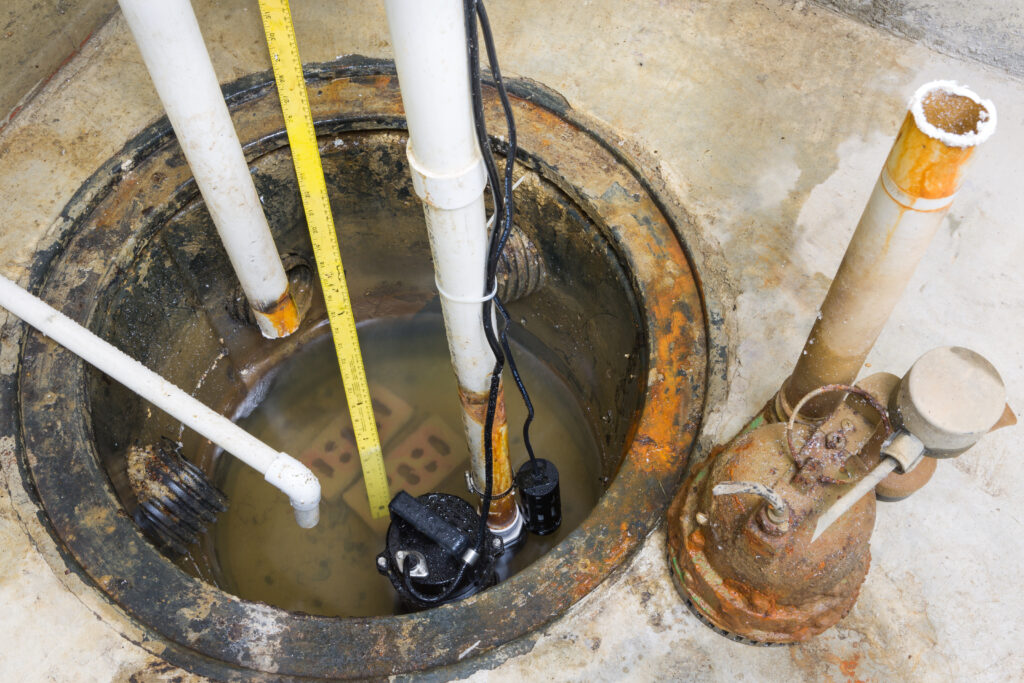
Homeowners usually don’t think about their sump pump—until the moment it won’t stop running. When a pump hums nonstop, day and night, it’s more than a noisy nuisance. It’s often the first red flag that something in your drainage system is struggling. Understanding why sump pump is constantly running helps protect your basement, your foundation, and your peace of mind.
Below, we break down the most common causes, hidden issues, warning signs of a failing pump, and when it’s time to bring in a professional.
Why Sump Pump Is Constantly Running
When homeowners contact us asking why sump pump is constantly running, there isn’t a one-size-fits-all answer. Think of your sump pump as the “heart” of your basement drainage system. If it runs nonstop, something upstream—or inside the pump itself—is forcing it to work harder than it should.
Here are the most common culprits:
1. A stuck float switch
The float is the pump’s on/off trigger. If it gets trapped in the “up” position because of debris, shifting basin walls, or a damaged switch arm, the pump never shuts down.
2. Overwhelming groundwater pressure
Even when it’s not raining, the water table beneath your home may be high. Homes near creeks, low-lying areas, or heavy clay soil often experience constant water intrusion below ground.
3. A damaged or missing check valve
Without a functioning check valve, water that the pump pushed upward flows right back into the pit. This forces the pump to run over and over to remove the same water.
4. Poor drainage around the home
Improper grading, clogged gutters, or short downspouts can push water back toward the foundation, overwhelming the system.
5. Undersized or aging sump pump
A pump that’s too small—or more than 7–10 years old—may run continuously simply because it can’t keep up anymore.
Continuous running is never normal. If you’re wondering why sump pump is constantly running, the safest action is to investigate promptly or have a technician assess the system before failure occurs.
Why Does My Sump Pump Keep Running Without Rain?
Many homeowners are surprised when the sump pump runs hard even during dry spells. Rain isn’t the only source of groundwater. Here’s what might be happening:
1. Naturally high water table
Some regions—especially parts of Bucks County, Montgomery County, and New Jersey—sit on land where groundwater naturally rests close to the foundation level. Even a dry week can produce steady water pressure.
2. Seasonal runoff below ground
Melting snow, distant storms, or rising river levels can push groundwater toward your home even if your neighborhood has blue skies.
3. Broken drainage tile (French drains)
Your home’s exterior drain system may be cracked, clogged, or collapsed. When this happens, water can’t travel away from your foundation and is forced into the sump pit instead.
4. Foundation cracks or gaps
Water finds entry points long before you can see visible moisture inside. Small cracks channel water into the system repeatedly.
5. Internal pump failure
If your pump runs but is weak, blocked, or partially clogged, it may fail to remove water efficiently. As a result, the float triggers the pump repeatedly, causing endless cycles.
If you’re still asking yourself why sump pump is constantly running when there’s no rain, that’s a major sign your system needs troubleshooting before flooding or burnout occurs.
How Can You Tell When a Sump Pump Is Going Bad?
Not every pump failure is dramatic. Most give subtle warnings before they quit. Here are the signs homeowners should watch for:
1. Unusual noises
Grinding, rattling, knocking, or humming without pumping suggests worn bearings, a failing motor, or internal blockage.
2. Excessive vibration
A pump that shakes as it operates may have a damaged impeller—similar to a fan blade that’s bent or off-balance.
3. Constant cycling or short cycling
If it runs every few minutes or won’t shut off at all, something is wrong. This is one of the biggest clues that your sump pump is going bad.
4. Visible rust or corrosion
Corrosion often means deteriorating components or bacteria buildup (iron bacteria), which can clog the system.
5. Age of the pump
Most pumps last 7–10 years. After that, failure becomes far more likely.
6. Water in the pit isn’t dropping
If the pump is running but the water level stays the same, the pump isn’t doing its job—likely due to a clog, motor weakness, or impeller damage.
7. Frequent power issues
If your breaker trips or the pump struggles to start, you’re dealing with an electrical or motor problem.
When these symptoms appear, homeowners usually start searching for sump pump repair, and with good reason. Delaying service increases the risk of basement flooding and pump burnout.
Hidden Issues Homeowners Often Overlook
Some sump pump problems are subtle and easy to miss:
1. Incorrect pump size
A pump that’s too small will run constantly. A pump that’s too large can short cycle, wearing it out prematurely.
2. Clogged discharge line
If the line is blocked by ice, mud, roots, or debris, water has nowhere to go—forcing the pump to run without success.
3. Power supply inconsistencies
Extension cords, overloaded circuits, or flickering power can cause irregular cycling and premature motor failure.
4. Basin debris
Small stones, sediment, and construction materials can interfere with the float switch or damage the impeller.
5. Poor installation by previous homeowners
DIY sump pump installations often skip essential components such as check valves, air relief holes, or proper pit sizing.
These issues may not be obvious, but they directly contribute to why sump pump is constantly running unexpectedly.
The Risks of Ignoring a Constantly Running Sump Pump
Letting a sump pump run nonstop is like driving a car with the engine light on—you can do it for a while, but damage is already happening.
1. Motor burnout
Continuous cycling overheats the pump, shortening its lifespan drastically.
2. Sudden basement flooding
Once the pump fails, any incoming water—groundwater, stormwater, or plumbing leaks—has nowhere to go.
3. Mold and mildew growth
A damp basement supports mold growth in as little as 24–48 hours.
4. Structural damage
Persistent moisture weakens foundation walls, corrodes metal components, and damages insulation or framing.
5. Higher energy bills
A pump that never stops wastes electricity, often adding surprise costs to your monthly utilities.
If you’ve noticed changes in water levels or suspect your pump isn’t keeping up, professional evaluation or sump pump repair can prevent expensive emergencies.
When to Repair vs. Replace a Sump Pump
Many homeowners ask whether it’s smarter to repair the pump or invest in a new one. Here’s a simple guide:
Repair the pump when:
The float switch is stuck or broken
The check valve needs replacing
Minor clogs are visible
The pump is less than 7 years old
Electrical connections need tightening
The discharge line is blocked
Replace the pump when:
It’s over 7–10 years old
The motor overheats or fails repeatedly
Repairs cost more than half the price of a new pump
The pump is improperly sized for your home
You’ve had more than two failures in the past year
If you’re unsure which option is best, a technician offering sump pump maintenance services can assess the entire system and give reliable guidance.
Sump Pump Repair and Maintenance Services in Bucks County
A constantly running pump doesn’t fix itself. Professional sump pump repair ensures that your system is safe, efficient, and ready for heavy rainfall or rising groundwater.
Pressman Home Services provides:
Full sump pump diagnostics and troubleshooting
Float switch and check valve replacement
Pump cleaning, debris removal, and basin inspection
Discharge line clearing and freeze-prevention solutions
Backup battery or water-powered backup system installation
Comprehensive sump pump maintenance services for year-round protection
Our preventative maintenance plans help homeowners stop emergencies before they start, especially in areas prone to high groundwater or seasonal flooding.
Why Homeowners in Bucks County, Montgomery County, Philadelphia & New Jersey Trust Pressman Home Services
When sump pump trouble appears, you need a team that understands the soil, weather patterns, and drainage challenges unique to our region. Pressman Home Services brings decades of hands-on experience, local expertise, and homeowner-first care.
We provide:
Fast, reliable service
Honest assessments
Transparent pricing
High-quality installation and repairs
Emergency support
Work backed by trust and professionalism
If you’re searching for a dependable expert to figure out why sump pump is constantly running, repair a failing unit, or set up ongoing sump pump maintenance services, Pressman Home Services is ready to help.
We proudly serve Bucks County, Montgomery County, New Jersey, and parts of Philadelphia. Contact us today for the most reliable sump pump services.