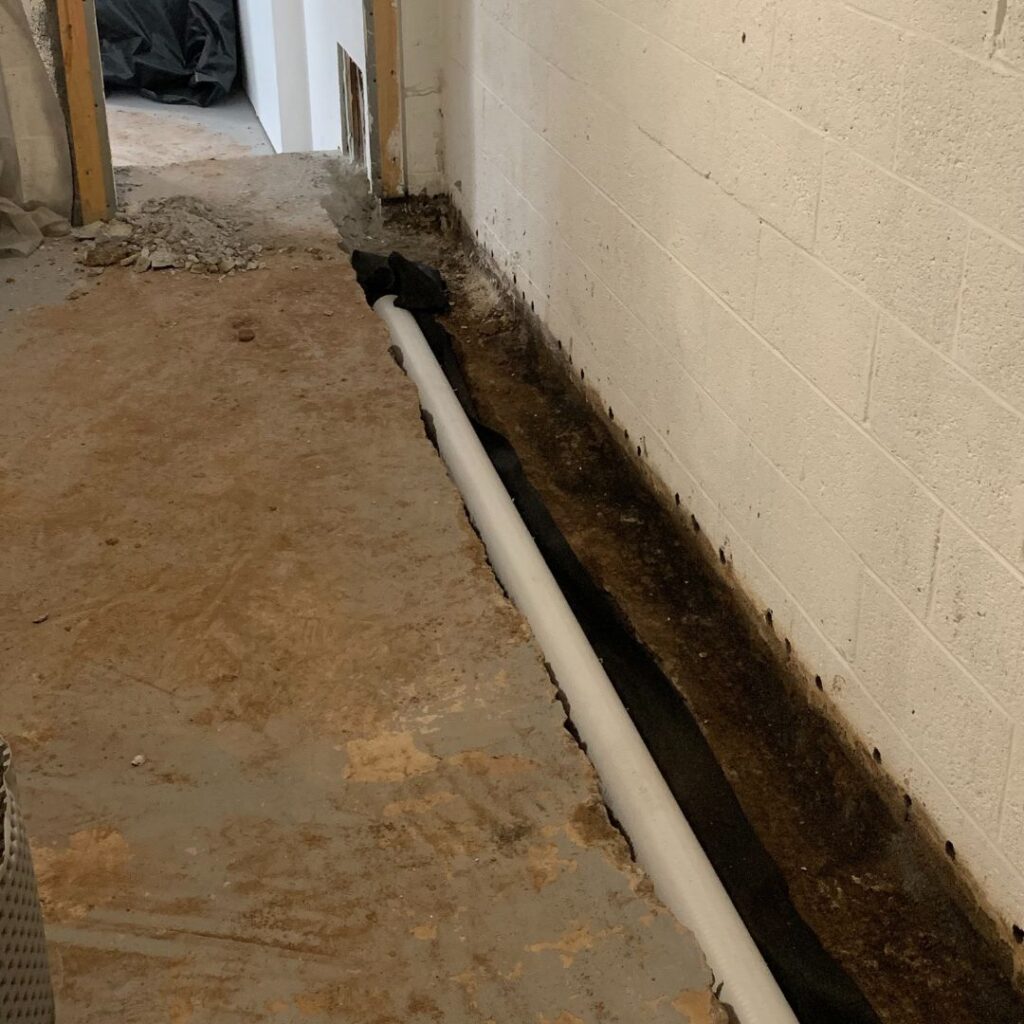
A wet basement has a way of sneaking up on homeowners. One small puddle after a heavy rain turns into damp floors, musty smells, and that uneasy feeling that something bigger is happening behind the walls. In many cases, the real issue isn’t the basement itself—it’s what’s happening around the foundation. That’s where an interior perimeter basement drain system comes into play, offering a proven way to manage water before it causes serious damage.
Homeowners often assume basement water problems can be fixed with a quick patch or a coat of sealant. While those solutions may help for a short time, they rarely address the real source of the problem. Water naturally collects around a home’s foundation, and without a proper drainage system, it will always find a way inside. This is why professional interior basement waterproofing focuses on controlling water rather than fighting it.
Why Basement Water Problems Start Along the Foundation
Most basement water problems don’t begin with a sudden leak. They start quietly, outside the home, where soil, rainwater, and the foundation meet. After heavy rainfall or snowmelt, water builds up in the ground around your house. That pressure pushes moisture toward the weakest points along the foundation walls and floor joints. Over time, even small openings can allow water to work its way inside.
Many homeowners are surprised to learn that concrete isn’t waterproof. It’s more like a sponge than a sealed container. As the soil around the foundation becomes saturated, moisture naturally moves toward the drier space inside the basement. This is why water often appears along the edges of the room instead of the middle. It’s also why an interior perimeter basement drain system is designed to run along the foundation line, right where water pressure is highest.
Another factor is how older homes were built. In areas like Bucks and Montgomery County, many houses—especially historic ones—were constructed long before modern drainage standards existed. These homes may have stone or block foundations that are more vulnerable to moisture intrusion. Over the years, settling soil and changing weather patterns can make these issues even worse, turning a once-dry basement into a recurring problem.
Gutters, downspouts, and grading all play a role, but they can only do so much. When groundwater levels rise, water doesn’t politely stop at the edge of your property. It presses against the foundation, looking for relief. Without a system in place to redirect it, that pressure often leads to damp walls, peeling paint, or visible water after storms.
Understanding that basement water problems start along the foundation—not inside the room—helps explain why surface-level fixes often fail. The solution isn’t just to block water temporarily, but to give it a controlled path away from your home before it can cause damage.
What an Interior Perimeter Basement Drain System Really Does
An interior perimeter basement drain system works with water instead of against it. Rather than trying to seal every crack or block moisture at the surface, this system manages water at the point where it naturally enters the basement—along the foundation walls and floor joint. Think of it like installing a gutter system inside your basement, guiding water safely away before it can spread.
The system is installed just inside the perimeter of the basement floor. A narrow trench is created along the foundation wall, where a drainage channel and pipe are placed. This pipe is designed to collect groundwater that seeps in through the foundation or rises beneath the slab. Once captured, the water is directed toward a discharge point, usually a sump pump, where it’s safely moved away from the home.
What makes this approach so effective is its location. Water pressure builds at the base of the foundation first, not in the middle of the basement. By intercepting moisture at this critical point, an interior perimeter basement drain system relieves pressure before it causes visible damage. Instead of water pushing through walls or bubbling up through the floor, it’s quietly redirected out.
This system also works behind the scenes. In many installations, the drain allows water to flow from inside the foundation wall into the system, reducing long-term stress on the structure. That’s why homeowners often notice improvements not just in dryness, but in air quality and odor as well. A basement that stays dry is less likely to develop mold, mildew, or that persistent musty smell.
When paired with professional interior basement waterproofing, this type of drain system becomes part of a larger strategy to protect the home. It doesn’t rely on temporary fixes or constant maintenance. Instead, it provides a consistent, reliable path for water—no matter how heavy the rain or how high the groundwater rises.
Signs Your Basement Needs an Interior Drain System
Basement water issues rarely show up all at once. Most homeowners notice small warning signs long before standing water becomes a serious problem. Paying attention to these early clues can help you avoid costly damage and ongoing frustration. In many cases, these symptoms point to the need for an interior perimeter basement drain system that manages water at its source instead of chasing leaks after they appear.
Water Along Basement Walls After Heavy Rain
One of the clearest signs of trouble is water appearing along the edges of the basement after a storm. You may notice thin lines of moisture where the wall meets the floor or small puddles forming near the perimeter. This usually isn’t coming from a burst pipe or an obvious crack—it’s groundwater pushing against the foundation.
When the soil around your home becomes saturated, pressure forces water toward the basement’s weakest points. If there’s no drainage system in place to relieve that pressure, water takes the easiest path inside. Over time, repeated exposure can lead to staining, peeling paint, and deterioration of foundation materials.
Homeowners often try to solve this with sealants or waterproof paint, but those solutions only cover up the symptoms. Water pressure doesn’t go away, and it will eventually find a new way in. A drainage system installed along the interior perimeter gives water a controlled path, keeping it off your floors even during heavy rain.
Musty Smells, Damp Floors, or Visible Foundation Damage
Not all basement water problems are obvious. Sometimes the first sign is a persistent musty smell that never quite goes away. Damp air, slightly wet floors, or darkened spots on foundation walls are all indicators that moisture is present, even if you don’t see active leaks. That lingering moisture often creates the perfect environment for mold to grow out of sight, behind walls or along foundation surfaces.
These conditions are common in older homes throughout Bucks and Montgomery County, especially historic properties built before modern waterproofing methods were standard. Over time, small amounts of moisture can slowly change the basement environment, leading to warped materials, crumbling mortar, and mold-friendly conditions that may affect indoor air quality throughout the home.
When moisture lingers, basements often feel colder, smell stale, or become uncomfortable for storage or living space. Mold spores and excess humidity don’t always stay in the basement—they can travel upward through the home’s air. Addressing these issues early with the right waterproofing approach helps protect not only the structure of the home, but also the overall comfort and air quality inside it.
Recurring Basement Leaks Despite Previous Repairs
Few things are more frustrating than fixing a basement leak—only to see it return. If you’ve already tried patching cracks, regrading soil, or extending downspouts and still experience water issues, that’s a strong sign the problem is deeper.
Recurring leaks often mean water is entering from multiple points or rising from below the basement floor. Surface-level repairs can’t handle ongoing groundwater pressure. This is where a professional basement waterproofing service looks beyond quick fixes and focuses on long-term water control.
When leaks keep coming back, it’s usually because water doesn’t have a proper exit path. An interior drainage solution addresses that core issue, helping prevent the cycle of repairs and repeat damage.
How an Interior Perimeter Drain Fits Into a Basement Waterproofing Service
A complete basement solution isn’t about one product or one repair—it’s about how all the parts work together to manage water consistently. This is where an interior perimeter basement drain system plays a central role. It acts as the backbone of a professional waterproofing approach, quietly handling groundwater day after day without relying on surface-level fixes.
How Interior Perimeter Drains Work With Sump Pump Systems
Interior perimeter drains are designed to guide water, not trap it. As moisture enters along the foundation wall or rises beneath the basement floor, the drain system captures it and channels it toward a collection point. That’s where a sump pump comes into the picture.
The sump pump’s job is simple: move collected water away from the home before it can build up. When paired with an interior drain system, the pump doesn’t have to struggle against sudden flooding. Instead, it handles a steady, controlled flow of water, which improves reliability and reduces wear over time.
This partnership is especially important during heavy rain or rapid snowmelt. Rather than reacting to water after it spreads across the basement floor, the system works continuously in the background, keeping the space dry without constant attention from the homeowner.
Why Interior Basement Waterproofing Focuses on Water Control, Not Just Sealing
Many homeowners are initially drawn to sealing because it feels like a direct solution—close the gap, stop the leak. The problem is that sealing doesn’t remove water pressure. It simply asks the foundation to hold back moisture that’s determined to get inside.
Interior drainage systems take a different approach. Instead of forcing water to stay outside, they provide a safe path for it to follow. This reduces stress on foundation walls and lowers the chance of new cracks forming over time. It’s a strategy built around control, not resistance.
This mindset is especially important for homes in areas with variable soil conditions, like those found throughout Bucks and Montgomery County. Changing seasons, older construction methods, and natural settling all make water behavior unpredictable. A system that adapts to those conditions is far more reliable than one that tries to block them entirely.
How a Complete Basement Waterproofing Service Protects the Entire Foundation
A professional waterproofing plan looks at the foundation as a whole system, not a collection of isolated problems. Interior drains, sump pumps, and proper discharge all work together to manage moisture around the entire perimeter of the home.
For historic homes in particular, this approach is critical. Older foundations often need solutions that protect the structure without compromising it. Interior drainage systems are installed with care, making them well-suited for homes that require a thoughtful, experienced touch.
By addressing water at the foundation level, homeowners gain more than a dry basement. They gain confidence that their home is protected against future moisture issues, not just the last storm.
Why Interior Basement Waterproofing Is a Long-Term Solution
When homeowners deal with basement water issues, the biggest concern is usually the same: Will this actually fix the problem for good? That’s where interior basement waterproofing stands apart. Instead of reacting to leaks as they appear, it creates a system that manages water continuously, year after year. At the center of that approach is an interior perimeter basement drain system, designed to work quietly in the background no matter the season.
Unlike temporary repairs, interior waterproofing solutions are built for changing conditions. Groundwater levels rise and fall. Soil expands and contracts. Heavy storms hit harder some years than others. A long-term solution doesn’t depend on perfect conditions—it adapts. By relieving water pressure along the foundation, an interior drainage system reduces the risk of future cracking, seepage, and moisture buildup.
This matters even more in communities like Norristown, Lansdale, Abington, and Doylestown, where many homes sit on older foundations or in areas with variable soil and drainage patterns. In these neighborhoods, homeowners often experience recurring basement issues not because something was done wrong, but because older construction simply wasn’t designed to handle modern water challenges. A professional basement waterproofing service takes these local factors into account when recommending solutions.
Interior systems are also less disruptive in the long run. Once installed, they don’t require constant patching or repeated repairs after every major storm. Homeowners gain peace of mind knowing their basement is protected whether it’s used for storage, living space, or future renovations. Dry basements are healthier basements, with better air quality and fewer moisture-related concerns.
Most importantly, interior waterproofing protects the value of the home. Water damage has a way of spreading quietly, affecting foundation materials, framing, and even indoor comfort. By investing in a system that addresses water at its source, homeowners are choosing stability over uncertainty and prevention over repeated repairs.
When you’re ready, the final section is Choosing the Right Basement Waterproofing Service, where we’ll tie everything together and talk about what to look for in a local, experienced contractor.
Choosing the Right Basement Waterproofing Service
When it comes to protecting your home, choosing the right basement waterproofing service matters just as much as the solution itself. Experience, local knowledge, and a clear understanding of how water affects different types of foundations all play a role in getting lasting results. A reliable contractor won’t push quick fixes—they’ll explain why an interior perimeter basement drain system makes sense for your home and how it fits into a complete waterproofing plan.
Homeowners in Bucks and Montgomery County—including Norristown, Lansdale, Abington, and Doylestown—often face unique challenges, especially in older or historic homes. These properties require thoughtful interior basement waterproofing that protects the structure without compromising its character. Working with a local team that understands these homes can make all the difference.
Pressman Home Services has extensive experience helping homeowners keep their basements dry with proven, long-term solutions. If you’re noticing signs of moisture or want to prevent future problems, their team is ready to help.
Call Pressman Home Services today to schedule an inspection and learn how an interior perimeter basement drain system can protect your home for years to come.