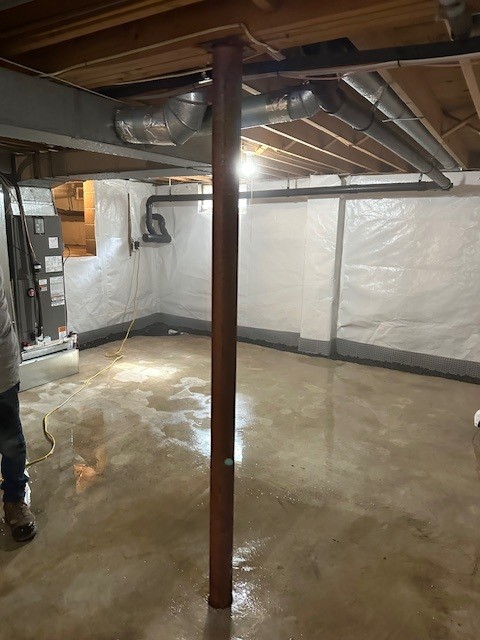
If you’ve ever walked into your basement after a heavy rain and caught that damp, musty smell—or worse, stepped into a small puddle—you’re not alone. For many homeowners, water in the basement feels like one of those problems that just keeps coming back, no matter how many times you clean it up.
That’s where understanding how does an interior basement drainage system work becomes incredibly important. Instead of constantly reacting to water after it shows up, the right system works quietly in the background, managing moisture before it ever becomes a visible problem. Think of it like a hidden pathway that guides water safely away from your home, long before it has a chance to damage your floors, walls, or foundation.
An interior basement drainage system isn’t just another home upgrade—it’s often the difference between a dry, usable space and a basement that always feels one storm away from trouble. And when paired with a professional basement waterproofing service, it becomes a long-term solution rather than a temporary fix.
Why Basements Get Wet in the First Place
Before you can fully understand how does an interior basement drainage system work, it helps to start with the root of the problem. Basements don’t just “randomly” get wet—there’s always a reason, and it usually starts outside your home.
Water behaves in predictable ways. It follows pressure, gravity, and the path of least resistance. Unfortunately, your basement often becomes that path.
How Water Builds Up Around Your Foundation
Picture your home like a boat sitting in soil instead of water. Every time it rains, that soil absorbs moisture like a sponge. Over time, the ground around your foundation becomes saturated, and all that water starts pressing against your basement walls.
This pressure is called hydrostatic pressure, and it’s one of the biggest reasons water finds its way inside. The more water builds up outside, the harder it pushes inward—looking for any tiny crack, gap, or weak point.
Even well-built homes aren’t immune. Concrete might seem solid, but it’s actually porous. That means water can slowly seep through it over time, especially when there’s constant pressure behind it.
This is exactly why homeowners start researching how does an interior basement drainage system work—because stopping water completely from the outside isn’t always realistic. Instead, managing it from the inside becomes the smarter, more reliable solution.
The Most Common Causes of Basement Leaks
Not all basement leaks come from the same source. In fact, most homes deal with a combination of issues that gradually lead to water problems.
Here are some of the most common culprits:
- Poor drainage around the home
If your yard slopes toward your house instead of away from it, water naturally collects near your foundation. - Clogged or short downspouts
When gutters don’t direct water far enough away, it pools right where you don’t want it. - Foundation cracks
Small cracks can form over time as your home settles, creating easy entry points for water. - Old or failing waterproofing systems
Many homes were built with minimal protection, and those systems can break down over time. - High water table levels
In some areas, groundwater naturally sits close to the surface, increasing the risk of basement moisture.
When these issues combine, water doesn’t just appear—it builds up gradually until your basement becomes the easiest place for it to go.
That’s where a professionally installed interior basement drainage system becomes essential. Instead of fighting water outside, it works with the natural flow of water to control it before it causes damage.
Why Water Always Finds a Way Inside
Here’s the honest truth: if water wants to get in, it usually will.
That’s not meant to sound discouraging—it’s just reality. Homes shift, soil expands and contracts, and materials age. Over time, even the smallest openings can become entry points.
Think of it like this: if you leave a tiny gap under a door during a storm, water doesn’t need a big opening—it just needs enough.
This is why so many homeowners eventually ask, how does an interior basement drainage system work, instead of relying only on sealants or temporary fixes. Patching cracks or applying coatings might slow things down, but they don’t relieve the pressure causing the problem in the first place.
An effective basement waterproofing service focuses on control, not just prevention. By managing where the water goes once it reaches your foundation, you’re no longer fighting a losing battle—you’re redirecting it.
And that shift in approach is what makes interior drainage systems so powerful. They don’t try to stop nature—they work with it.
How Does an Interior Basement Drainage System Work?
Now that you understand why water builds up around your home, let’s get to the question most homeowners are really asking: how does an interior basement drainage system work in real life?
The simplest way to think about it is this: instead of trying to block water completely (which is nearly impossible), an interior system controls and redirects it safely away.
Imagine your basement has an invisible safety net beneath it—a hidden pathway that catches water the moment it tries to come in and quietly escorts it out before it can cause damage. That’s exactly what an interior basement drainage system is designed to do.
Let’s break it down step by step.
Step 1: Water Enters Along the Foundation
Water doesn’t usually burst dramatically into your basement. Most of the time, it seeps in slowly and quietly along the weakest points—typically where the floor meets the wall.
This area is called the cove joint, and it’s one of the most common entry points for water. As pressure builds outside, moisture begins to push through tiny gaps, cracks, or porous concrete.
Here’s the key: this is completely normal. Almost every basement will allow some level of moisture intrusion over time.
That’s why understanding how does an interior basement drainage system work is so important—it doesn’t rely on stopping water entirely. Instead, it prepares for this exact moment.
Step 2: Drainage Channels Capture the Water
Once water enters, it doesn’t get a chance to spread across your floor. A professionally installed interior basement drainage system includes a hidden channel—usually installed beneath the basement floor along the perimeter.
This channel acts like a collection system, catching water right at the entry point.
Think of it like a gutter system—but instead of being on your roof, it’s installed under your basement floor.
As water seeps in, it drops directly into this channel instead of pooling on your floor or soaking into your walls. This is where the system starts doing its real job: controlling water before you ever notice it.
Step 3: Water Moves Through the Drain Tile System
Once captured, the water doesn’t just sit there. It flows through a network of pipes—often called a drain tile system—that runs along the perimeter of your basement.
These pipes are designed with small openings that allow water to enter while keeping debris out. From there, gravity helps guide the water toward a central collection point.
This part of the process is one of the biggest reasons homeowners start researching how does an interior basement drainage system work—because it’s happening completely out of sight.
You don’t hear it. You don’t see it. But every time it rains, this system is quietly moving water away from your home’s foundation.
And when combined with a professional basement waterproofing service, this setup becomes even more reliable, ensuring water is consistently managed no matter the conditions outside.
Step 4: The Sump Pump Removes the Water Safely
All the water collected by the system is directed into a sump pit, where the final piece of the puzzle takes over: the sump pump.
When the water level in the pit rises, the pump automatically activates and pushes the water safely away from your home—usually through a discharge line that leads far from your foundation.
This is the moment where everything comes together.
Instead of water building pressure, seeping through cracks, and damaging your basement, it’s:
- Collected
- Redirected
- Removed
All without you lifting a finger.
That’s the full answer to how does an interior basement drainage system work—it’s not about fighting water, it’s about managing it intelligently.
When installed correctly, an interior basement drainage system works 24/7, protecting your home during heavy storms, seasonal changes, and everything in between.
Signs You May Need an Interior Basement Drainage System
Not every basement problem starts with standing water. In fact, most homeowners notice subtle warning signs long before things get serious. The challenge is knowing what those signs mean—and when it’s time to start asking, how does an interior basement drainage system work, because your home might already be telling you it needs one.
Think of these signs as early signals. Catch them early, and you can avoid costly damage down the road.
Water Seeping Through Basement Walls
One of the most obvious—and most concerning—signs is water making its way through your basement walls.
This might look like:
- Damp streaks running down concrete walls
- Small wet spots that appear after heavy rain
- Visible cracks with moisture around them
At first, it might seem minor. You wipe it away, and everything looks fine again. But what’s really happening is that water is building up outside your foundation and slowly forcing its way inside.
This is exactly the kind of situation where understanding how does an interior basement drainage system work becomes critical. Instead of letting that water spread across your basement, a proper system captures it right at the entry point and redirects it safely away.
Left untreated, this kind of seepage can lead to bigger structural issues—and that’s when a professional basement waterproofing service becomes essential.
Musty Smells or Mold Growth
Sometimes, you won’t see water at all—but you’ll definitely smell it.
That damp, musty odor in your basement is often caused by excess moisture in the air. Even small amounts of water intrusion can create the perfect environment for mold and mildew to grow.
Signs to watch for include:
- A persistent “earthy” smell
- Visible mold on walls, floors, or stored items
- Increased humidity or condensation
Here’s the tricky part: you don’t need standing water for this to happen. Moisture can build up slowly over time, especially in basements without proper drainage.
This is another reason homeowners start looking into how does an interior basement drainage system work—because the system doesn’t just handle visible water. It helps control the moisture conditions that lead to mold in the first place.
An interior basement drainage system works behind the scenes to keep water from lingering, which helps create a drier, healthier space overall.
Standing Water or Damp Floors
If you’re seeing actual puddles or consistently damp floors, your basement is already past the early warning stage.
This might happen:
- After heavy rainstorms
- During seasonal changes
- When snow melts rapidly
At this point, water isn’t just sneaking in—it’s accumulating.
And once water starts pooling, the risks increase quickly:
- Damage to flooring and belongings
- Increased mold growth
- Potential impact on your home’s foundation
This is where the full value of understanding how does an interior basement drainage system work really comes into focus. Instead of reacting every time water appears, the system prevents it from ever reaching your floor in the first place.
A properly installed interior basement drainage system collects and removes water continuously, turning a recurring problem into a controlled, predictable process.
If you’re noticing any of these signs, it’s not just a one-time issue—it’s a pattern. And patterns like this usually mean it’s time to consider a long-term solution rather than temporary fixes.
Get Expert Basement Waterproofing Service You Can Trust
By now, you’ve seen the full picture—why basements get wet, what warning signs to watch for, and most importantly, how does an interior basement drainage system work to protect your home from ongoing water damage.
But here’s the truth: even the best system only works as well as the way it’s installed.
An interior basement drainage system isn’t a DIY weekend project. It requires the right design, proper placement, and a deep understanding of how water behaves around your specific home. Every foundation is different. Every soil condition is different. And that’s why working with experienced professionals makes all the difference.
Think of it like this—if your basement were a ship, you wouldn’t just patch a leak and hope for the best. You’d want a system in place that actively manages water and keeps everything running smoothly, no matter the conditions outside.
That’s exactly what a professional basement waterproofing service provides.
ake the first step toward a dry, protected home. Let the experts at Pressman Home Services assess your basement and recommend the right solution for your needs.
Contact Pressman Home Services today to schedule your inspection and get a professional basement waterproofing service you can rely on.
Because when it comes to your home, peace of mind starts from the ground up.