Exterior Basement Waterproofing in Bucks & Montgomery County, PA
Water that keeps finding its way into a basement usually starts on the outside of the wall. Exterior basement waterproofing stops it there. At Pressman Home Services, our team excavates down to the footing, repairs the foundation, applies a waterproofing membrane, adds a drainage board and footing drain, and backfills so the soil carries water away instead of holding it against the wall. It’s the most complete way to keep groundwater off your foundation, and it’s work Ross Pressman and our crew handle ourselves, onsite from the first shovel to the final grade, with no subcontractors.
We provide exterior waterproofing for homeowners across Bucks County, Montgomery County and nearby New Jersey. Below, you’ll find who this service is right for, how our process works, what shapes the cost, and the methods we combine to protect your foundation for the long haul.
Exterior waterproofing makes the most sense when water is reaching the outside face of your foundation walls and pressing its way through. We usually recommend it for homeowners who see one or more of these patterns:
- Seepage, damp patches or puddles along the walls after heavy rain or snowmelt
- White, chalky efflorescence or water stains that keep coming back
- Leaking cracks in poured or block walls, especially cracks that widen through the freeze-thaw season
- A musty smell that persists even when the basement looks dry
- Interior fixes that have been tried and haven’t stopped the water at the walls
In much of Bucks County, the soil is heavy with clay. It holds water, swells when wet and keeps steady pressure on foundation walls long after a storm passes. Older stone and block foundations, which are common in towns like Doylestown, New Hope and Lansdale, also have more joints and pores for that water to work through. Those conditions make the outside of the wall the place where the problem begins.
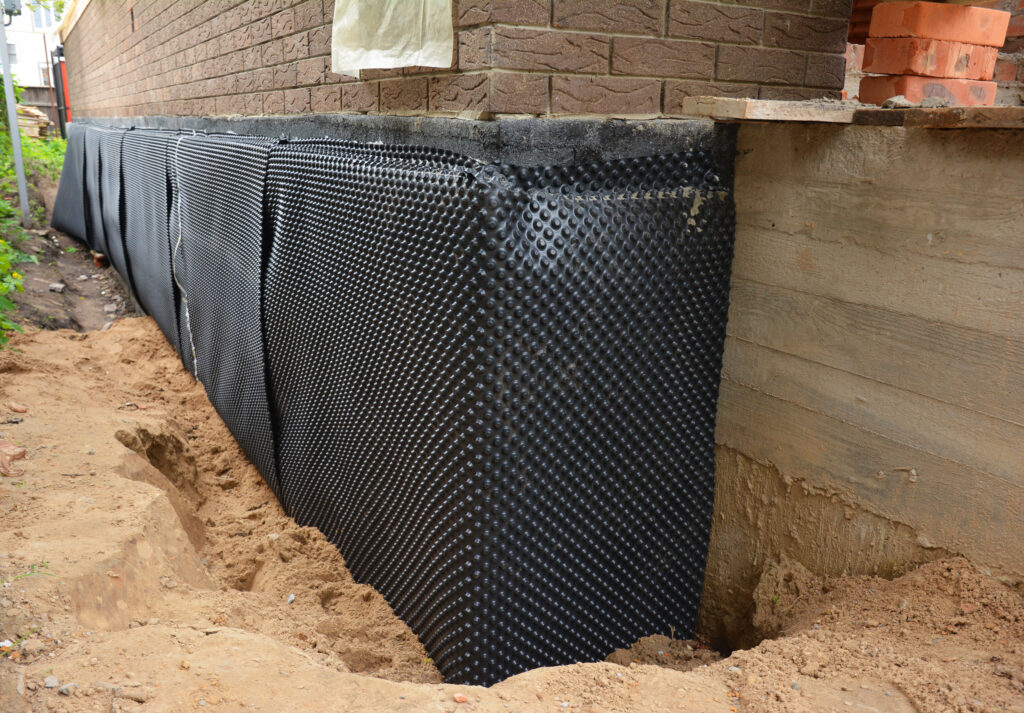
Interior and exterior systems solve the problem in different places. An interior system collects water after it gets through the wall and sends it to a sump pump. An exterior system keeps water from reaching the wall in the first place. Exterior waterproofing tends to be the better choice when:
- The foundation walls themselves are deteriorating from constant moisture, and you want to protect the masonry rather than only manage the water
- You’re planning to finish the basement and want the walls dry, not just the floor
- Water is entering high on the wall, where an interior perimeter drain can’t intercept it
- The home is being renovated or regraded anyway, so the excavation is already planned
- You’d rather not open up a finished basement floor
Interior waterproofing is often the better fit when the yard is hard to dig, when a deck, driveway or addition sits against the wall, or when the main problem is water rising under the floor slab. Plenty of homes do best with a combination.
Our Exterior Waterproofing Process
Every exterior job follows the same sequence. Skipping or rushing any step is how membranes fail early, so we don’t.
Inspection and Plan
We start inside and out. We look at the walls, cracks and stains in the basement, then walk the outside to check grading, downspouts, patios and anything built against the foundation. You get a clear plan that shows which walls need exterior work, how deep we’ll dig and how the water will be carried away.
Excavation
Before any digging, underground utilities are marked through the state’s One Call system. We then excavate along the affected walls down to the footing, exposing the full height of the foundation. We protect landscaping where we can and stage the soil so it can go back in properly.
Cleaning and Crack Repair
The exposed wall is cleaned of soil, old coatings and loose material so the membrane can bond. Cracks, failed mortar joints and gaps are repaired with materials made to hold up against water pressure. This is where we see the real condition of the wall, and we’ll tell you what we find.
Waterproofing Membrane
We apply a continuous, heavy-duty waterproofing membrane from the footing up to just below grade. The goal is one unbroken layer with no thin spots or gaps at corners, pipe penetrations or the footing joint.
Drainage Board and Footing Drain
A drainage board goes over the membrane. It protects the membrane during backfill and gives water a clear path down the wall instead of letting it sit against the foundation. At the footing, a perforated drain set in clean stone collects that water and carries it to daylight or to a sump pump, which relieves the hydrostatic pressure that pushes water into the basement.
Backfill and Grading
We backfill in stages with material that drains well, then finish the grade so it slopes away from the house. Downspouts are directed away from the foundation so roof water doesn’t end up back at the wall.
Basement Waterproofing Reviews From Local Homeowners
What Drives the Cost of Exterior Waterproofing
Every exterior job is priced after we’ve seen the property, because the same service can involve very different amounts of work from one home to the next. These are the factors that make the biggest difference:
- Depth. A full-depth basement takes far more digging, shoring and backfill than a shallow foundation or a partial wall.
- Access. Open lawn is the simplest case. Patios, walkways, decks, driveways, mature plantings and tight lot lines between homes all add time and restoration work.
- Length. The total linear footage of wall being waterproofed, whether that’s one problem wall or the full perimeter.
- Drainage. Where the water can go matters. A footing drain that can run to daylight on a sloped lot is simpler than one that needs a new sump pit and pump.
- Wall condition. Old stone or block that needs extensive repair before the membrane goes on takes more labor than a sound poured wall.
During your estimate, we’ll walk you through how each factor applies to your home, so you know exactly what you’re paying for before any work starts.
Why Homeowners Trust Pressman
Exterior Basement Waterproofing Methods We Combine
Exterior waterproofing works best as layered protection. Depending on what we find, we combine these methods.
Foundation Membrane and Drainage Board
This is the core of the system: excavating to the footing, waterproofing the outside of the wall and protecting it with a drainage board. It’s the most labor-intensive part, and it’s also the part that stops water at the foundation itself. For older homes that have dealt with moisture for years, it addresses the problem at its root instead of managing it after it gets in.
Exterior French Drain at the Footing
A perforated pipe in a gravel bed along the footing catches groundwater before it can build pressure against the wall and carries it away from the house. On properties with dense clay soil or a home that sits downhill from its neighbors, this drain does a lot of the heavy lifting.
Surface Water Management
Roof runoff, driveways and flat or reversed grading can send a surprising amount of water straight to the foundation. Extending downspouts, regrading soil to slope away from the house, and adding swales or catch basins reduce how much water the membrane ever has to handle.
A properly installed exterior system can protect a foundation for decades. That’s a realistic expectation, not a guarantee, because how long it lasts depends on a few things:
- Materials. Heavy-duty membranes and drainage boards hold up to years of soil pressure. Thin or low-grade coatings break down faster, especially in wet, shifting soil.
- Soil. Clay that swells and shrinks with the seasons puts more stress on the system than sandy, well-draining soil.
- Installation quality. Surface prep, continuous coverage and a working footing drain matter as much as the product.
- Upkeep. Clean gutters, downspouts that discharge away from the house, and grading that still slopes the right way all reduce the load on the membrane.
The membrane itself needs very little attention once it’s buried.
Frequently Asked Questions
How long does exterior waterproofing last?
With quality materials and a sound installation, exterior waterproofing can protect a foundation for decades. Longevity depends mostly on the soil, the materials used and whether the drainage around the system keeps working. Keeping gutters, downspouts and grading in good shape is the simplest way to help it last.
How much does exterior basement waterproofing cost?
It depends on how deep the foundation is, how easy the walls are to reach, how many feet of wall need work and where the water can drain. A single wall in an open yard is a very different job from a full perimeter under patios and walkways. We give you a written estimate after we’ve inspected the home, so the number reflects your property rather than a guess.
How much of my yard will you need to dig up?
We excavate only along the walls being waterproofed, and the trench needs to go down to the footing and be wide enough to work in safely. Lawn and planting beds next to the house will be disturbed. We’ll show you the work area before we start, protect what we can, and backfill and grade when we’re done.
Is interior or exterior waterproofing better?
Neither is better in every case. Exterior waterproofing keeps water off the wall and protects the foundation itself, while interior waterproofing manages water that gets in and is less disruptive outside. The right answer depends on where the water enters, what’s built around your house and how you use the basement, and some homes need both.
Can exterior waterproofing be done in winter?
Excavation is possible in milder winter stretches, but frozen ground and cold temperatures slow digging and can affect how membranes cure. We schedule exterior work around the weather and won’t install a membrane in conditions that would weaken it.
Schedule an Exterior Waterproofing Estimate
If water keeps coming through your basement walls, the fix usually starts outside. Our team will inspect your foundation, explain whether exterior waterproofing, interior waterproofing or a combination makes sense, and give you a clear plan before any digging begins.
Emergency Services
Available 24/7 for your peace of mind.
Satisfaction Guarantee
Your satisfaction is our top priority.
Financing Available
Flexible financing options to fit your budget. Including 100% financing.
20 Years Experience
Our team has over 20 years of experience in basement waterproofing.