Let’s talk about something most homeowners don’t think about—until they have to. You walk downstairs and notice that musty smell. Maybe you spot a suspicious water stain creeping across the basement floor. It’s not a flood, but it’s enough to make your heart sink. Water in the basement isn’t just inconvenient—it can mean mold, structural damage, and costly repairs. But there’s a smart, simple system that’s been protecting homes for decades: the French drain.
How French drains prevent basement water damage is more than just a good trivia question—it’s something every homeowner should understand. These drains may be hidden underground, but they do heavy lifting when it comes to keeping your foundation dry and your peace of mind intact.
What Is a French Drain?
Imagine your yard is like a sponge. After a heavy rain, water soaks into the soil—but sometimes, there’s just too much. If your property isn’t draining properly, all that extra water starts heading straight for your home’s foundation. That’s where a French drain steps in like a quiet hero underground.
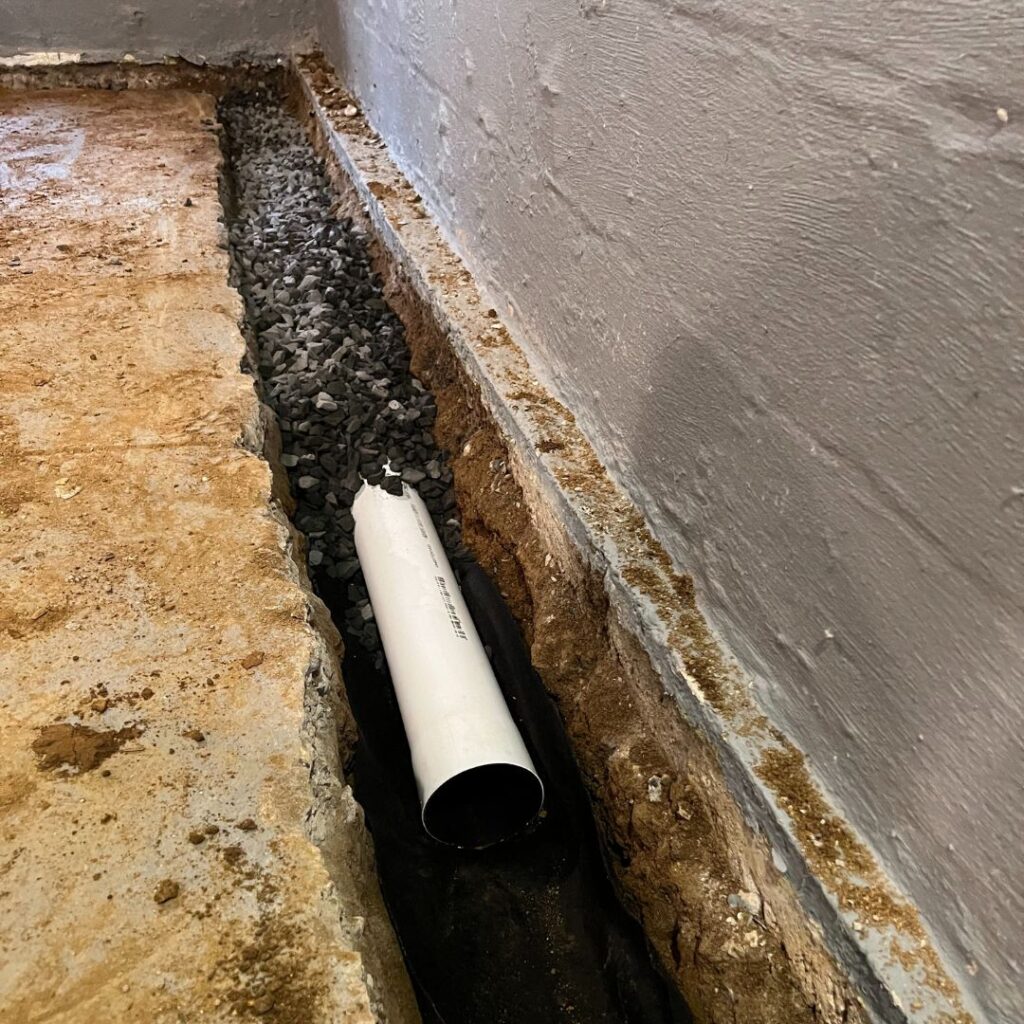
A French drain is a simple but clever drainage system designed to redirect water away from your home—especially your basement. At its core, it’s a gently sloped trench filled with gravel or rock, with a perforated pipe running through it. Water naturally flows into the trench, through the gravel, into the pipe, and then is directed far from your home where it can’t do any damage.
Think of it like a hidden escape route for water. Rather than pooling around your foundation and seeping into the basement, it gets caught and redirected efficiently. It’s one of those behind-the-scenes systems that does its job so well, you barely notice it’s there—until it saves you from a flooded basement.
French drains can be installed around the perimeter of your home, inside your basement, or in your yard—depending on where the water problem is starting. They’re especially helpful on sloped properties or areas with heavy rainfall.
In short, it’s a time-tested solution that’s as practical as it is effective. And when it comes to learning how French drains prevent basement water damage, it all starts with understanding this straightforward system.
How French Drains Prevent Basement Water Damage
So, how do French drains really keep your basement from becoming a waterlogged mess? The answer lies in simple physics and smart placement.
Basement water damage often begins outside the home. When it rains, water naturally follows the path of least resistance. If your yard is poorly graded or your soil doesn’t absorb water quickly, that water can start to build up along the foundation walls. Over time, it seeps through cracks or porous concrete and settles right where you don’t want it—your basement floor.
Now here’s where the French drain goes to work.
A French drain acts like a traffic cop for groundwater. Instead of letting it puddle and press against your foundation, it gives that water somewhere else to go. Installed either along the outside perimeter of your home (called an exterior French drain) or under the basement floor (an interior French drain), it captures water before it becomes a problem.
Here’s a simple breakdown of how it works:
- Water hits the gravel in the trench.
- It filters down into the perforated pipe.
- The pipe, which is sloped, carries the water away—usually to a storm drain, dry well, or lower area of your yard.
This constant redirection keeps hydrostatic pressure off your foundation walls and keeps moisture from seeping inside. That means fewer damp spots, no moldy smells, and way less stress when it storms.
And here’s the kicker: a properly installed French drain doesn’t just manage water—it prevents damage from ever occurring in the first place. That’s why it’s such a popular choice for homeowners who want a proactive, long-term solution. If you’ve ever wondered how French drains prevent basement water damage, the key is this redirection. No pooling. No pressure. No panic.
Over time, a French drain can help prevent:
- Mold and mildew growth
- Cracked or bowed basement walls
- Flooded storage areas
- Warped flooring or ruined drywall
- That classic damp, musty basement smell
Think of it as insurance for your home’s lowest level. It’s quiet, passive, and always working—even while you sleep or leave town. That’s peace of mind you can’t put a price on.
Signs You Might Need a French Drain
Sometimes, water problems sneak up on you. Other times, they slap you in the face with a puddle in the middle of your basement. Either way, the signs that you might need a French drain are often right in front of you—you just have to know what to look for.
Here are the most common red flags homeowners encounter:
1. Water in the Basement After It Rains
If every storm leaves you with wet spots, puddles, or a damp carpet downstairs, that’s a major clue. Occasional water may not seem like a big deal, but repeated exposure is how mold, mildew, and structural issues start. And this is exactly how French drains prevent basement water damage—by stopping this cycle at the source.
2. Damp, Musty Smells
Even if you don’t see standing water, that distinctive basement funk is often the result of moisture buildup. It’s a sign that water is entering your basement—even if it’s evaporating before you notice it. Over time, this can lead to hidden mold growth behind walls or under flooring.
3. Cracks in the Foundation Walls or Floor
Water puts pressure on your foundation. Over time, this can cause cracks—especially if the soil around your home holds water like a sponge. If those cracks are leaking or growing, you’re seeing a warning sign loud and clear.
4. Pooling Water in the Yard
Your drainage problems might start outside. If your lawn turns into a swamp after a rainstorm, or you notice water pooling near the base of your house, it’s likely not draining properly. A French drain in the yard can redirect that water before it gets any ideas about heading for your basement.
5. Efflorescence on Basement Walls
This one’s a little sneaky. Efflorescence looks like a white, chalky residue on concrete or brick. It’s actually salt left behind by water as it evaporates. It’s not dangerous—but it is a sign that water is getting in.
6. Sump Pump Running Constantly
If your sump pump is working overtime, it might be compensating for poor drainage. A French drain system can ease the load, offering a more balanced, less stressful way to manage groundwater.
Why Ignoring the Signs Isn’t Worth It
Let’s be honest: it’s easy to ignore small water issues. Maybe it only happens after big storms. Maybe it dries up in a day or two. But even small, infrequent moisture problems can turn into costly repairs—fast.
Basement waterproofing isn’t just about fixing damage. It’s about preventing it. And that’s exactly how French drains prevent basement water damage—by quietly doing their job every day, so you don’t wake up to a soggy, musty mess.
If any of these signs are showing up at your home, it’s time to think about your drainage situation—and whether it’s time to call in the pros.
How Pressman Home Services Can Help
Let’s face it: drainage issues can be tricky. You might spot water in the basement and assume it’s a plumbing problem. Or maybe you try a DIY fix like sealing cracks or installing a sump pump—only to find the moisture keeps coming back. That’s because basement water damage is often caused by deeper, hidden issues underground.
Knowing how French drains prevent basement water damage is one thing—installing one the right way is another. That’s where Pressman Home Services comes in.
Why You Need a Professional
Installing a French drain isn’t just about digging a trench. It takes:
- An understanding of your property’s grading and soil type
- Knowledge of local drainage codes and regulations
- Expert placement and slope calculations
- Precision to avoid damaging existing pipes, cables, or your foundation
Now that you understand how French drains prevent basement water damage, the next step is to protect your home before water damage even has a chance to start.
Don’t wait for the next storm to test your basement’s luck. Contact Pressman Home Services today for a professional assessment and expert installation. We’re here to keep your home high, dry, and worry-free—rain or shine.