Basement Waterproofing in Warminster, PA
Warminster is where Pressman Home Services started, and our shop on Stout Drive is still home base. That gives us a close look at how basements in this town fail. Most Warminster homes are ranches, split-levels and bi-levels built from the 1950s through the 1970s on concrete block foundations, and those walls are now 50 to 75 years old. Basement waterproofing in Warminster usually means working with that block, not against it. Below, we cover why these basements take on water, the systems we install, how we handle damp basements and failed drainage, and the Warminster neighborhoods we work in every week.
Most Warminster homes were built in the 1950s–70s building boom, and three things explain why so many of their basements take on water today:
- Aging block foundations. Hollow concrete block soaks up water and holds it in the cores, while mortar joints wear out over decades. That’s why we drill weep holes at the base of block walls, so the cores drain into the drainage system instead of into your basement.
- Worn-out original drainage. Most homes from this era came with basic footer tile that has clogged with silt or failed after 50+ years, so water has nowhere to go but in.
- Slow-draining clay soil. Warminster’s clay-heavy soil holds rain against the foundation for days after a storm. That builds pressure that pushes water through cracks, joints and the wall-floor seam.
Newer homes on poured concrete leak differently, usually through a single crack. We confirm your foundation type before recommending anything.
Basement Waterproofing in Warminster: Systems We Install
Most Warminster basements need two or more systems working together. The right combination depends on how the water gets in, which we confirm during the inspection.
Interior Perimeter Drainage
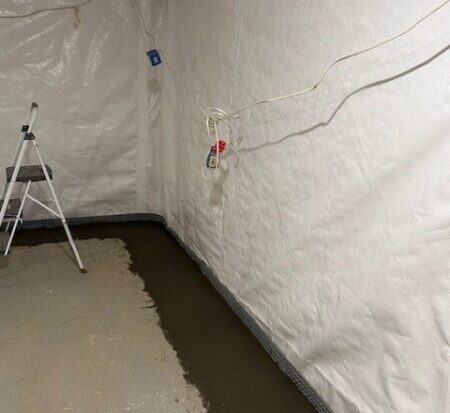
We cut the floor along the walls, install a perforated drain in clean stone at the footing, and tie in weep holes at the base of block walls. Water from the cores and the wall-floor joint drains into the channel before it reaches your floor. This interior waterproofing approach relieves the water pressure behind the wall instead of trying to hold it back.
Sump Pumps and Battery Backups
Interior drainage needs somewhere to send the water. We install sump pits with tight-fitting lids and pumps sized to the volume your basement takes on. We also add battery backups for storms that knock out the power. For pump options, replacements and what to expect on install day, see our page on sump pump installation in Warminster.
Crack and Mortar Joint Repair
Eroded mortar joints and leaking cracks get repaired directly, then tied into the drainage plan so the water has somewhere to go.
Exterior Waterproofing and French Drains
Where the yard allows it, we excavate along the foundation, apply a waterproofing membrane and add drainage at the footing. On lots where surface water runs toward the house, a French drain or corrected grading moves it away before it soaks in.
Damp Basement Solutions for Warminster Homes
Not every Warminster basement has standing water. Many just feel damp, smell musty or leave a white, chalky powder on the block. Dampness without puddles still means moisture is moving through the wall or condensing on it, and the fix depends on which one it is.
Seepage or Condensation?
A simple test helps. Tape a square of aluminum foil to the wall and leave it for a day or two. If moisture collects on the room side of the foil, it’s condensation from humid air. If it collects behind the foil, water is coming through the wall. In Warminster’s humid summers, warm air hitting cool block can produce both at once.
Watch for these signs as well:
- A musty smell that stays even when the floor looks dry
- White efflorescence on block or concrete walls
- Peeling or bubbling paint and water stains low on the walls
- Mold or mildew on stored boxes, drywall or framing
- Damp patches along the wall-floor joint after rain
Fixing the Moisture Source
For condensation, a properly sized dehumidifier, better air movement and clear gutters often make a real difference. When moisture is coming through the block, a dehumidifier only treats the symptom. Long-term damp basement solutions start with drainage: weep holes to empty the cores, a perimeter drain to catch seepage, and a vapor barrier on the wall where it makes sense.
If moisture has already led to mold, we handle mold removal and correct the water problem behind it. Homes with a crawl space instead of a full basement face the same issues. Our crawl space waterproofing in Warminster page covers vapor barriers, drainage and ventilation for those homes.
A lot of Warminster homes already have some drainage. The problem is that it no longer works. Original footer tile from the 1950s and 1960s was often laid without filter fabric, so silt from the clay soil has packed the stone and clogged the pipe over decades. Some systems were never connected to a working outlet. Older interior drains may also have been crushed or blocked during later renovations.
- Water shows up at the wall-floor joint during every heavy rain
- The sump pump rarely runs, even after storms
- Wet spots return in the same places despite surface repairs
- The basement was dry for years, then started leaking
We locate the failed sections and remove the clogged stone and pipe. We replace them with fabric-wrapped stone and new perforated pipe that carries water to the sump. We don’t patch around a dead drain, because it will fail again in the same spot. Discharge is routed outdoors, away from your foundation and your neighbor’s yard.
If water is coming up out of a floor drain rather than through the walls, that’s a plumbing issue. Our sister company, Pressman Plumbing, handles it.
Areas We Serve in Warminster
We work throughout Warminster Township and the 18974 ZIP code, including:
- Warminster Heights: built in 1943 as wartime housing, these 80-year-old homes often have worn grading and short downspouts that send water toward the foundation.
- Hartsville: homes on low ground along the Little Neshaminy Creek can see groundwater rise from below after long rains, so they often need drainage under the floor, not just at the walls.
- Johnsville: the village around the old Naval Air Development Center, where postwar block foundations usually call for interior drainage at the footing.
Davisville, Rosewood Park and Nearby Neighborhoods
We also work in Davisville, Rosewood Park, Casey Highlands and Breadysville, plus Ivyland Borough, which is surrounded by Warminster. Next door, we provide basement waterproofing in Warrington, PA and basement waterproofing in Southampton, PA. For the rest of the county, see basement waterproofing in Bucks County or our full service area.
Our Waterproofing Process
Every job follows the same four steps, whether it’s a single crack or a full perimeter system.
- Inspection. We confirm the foundation type and walk the basement and outside grading to find every active water entry point.
- Written plan. You get a clear scope of work and price in writing before anything is scheduled.
- Installation. Our own crew installs the system, typically in one to a few days depending on scope.
- Follow-up. We check back after the system has handled real rain and answer any questions.
What Our Clients Are Saying
Why Warminster Homeowners Choose Pressman
Pressman Home Services is family-run and owner-operated. Ross Pressman and our own crew are onsite from the first inspection to the final cleanup, and we never hand jobs to subcontractors. Because our shop is in Warminster, we’re minutes from most homes in town, and these block foundations are the ones we work on most.
- Our own crew, never subcontractors
- Honest recommendations, including when a gutter or grading fix is enough
- Satisfaction guarantee and financing options
- 24/7 emergency service for active water
Frequently Asked Questions About Basement Waterproofing in Warminster
My 1960s ranch has a concrete block basement. Is it harder to waterproof?
Not harder, just different. Block lets water in through hollow cores and aging mortar joints rather than one crack. The fix is usually an interior drainage system with weep holes at the base of the wall. Once that’s in place, a block basement stays as dry as a newer poured one.
Why does my Warminster basement only get wet after heavy rain?
Clay soil holds storm water against the foundation for days after the rain stops. That pressure pushes moisture through cracks, mortar joints and porous block until the soil drains. Short downspouts and settled grading make it worse.
Is a dehumidifier enough for a damp basement?
It helps, especially in summer, by controlling humidity, musty odors and mold. It won’t stop water coming through the walls or floor. In most Warminster block basements it works alongside drainage rather than replacing it.
Do you work in Warminster Heights, Hartsville and Ivyland?
Yes. We work throughout Warminster Township, including Warminster Heights, Hartsville, Johnsville and Davisville, as well as Ivyland Borough. Because we’re based in town, inspections in these neighborhoods are usually easy to schedule.
Where can my sump pump discharge?
Outdoors, to a spot where the water drains away from your home and your neighbors. Local sewer authorities generally don’t allow sump pumps to tie into the sanitary sewer, so we confirm the discharge plan before installation.
Schedule Your Basement Waterproofing in Warminster
Water in a block basement rarely fixes itself, and each wet season makes the repair bigger. Tell us what you’re seeing downstairs and our team will set up a free inspection. We’ll explain what’s causing the water and give you a plan built for your home. Get in touch with our team through our contact form.
Emergency Services
Available 24/7 for your peace of mind.
Satisfaction Guarantee
Your satisfaction is our top priority.
Financing Available
Flexible financing options to fit your budget. Including 100% financing.
20 Years Experience
Our team has over 20 years of experience in basement waterproofing.