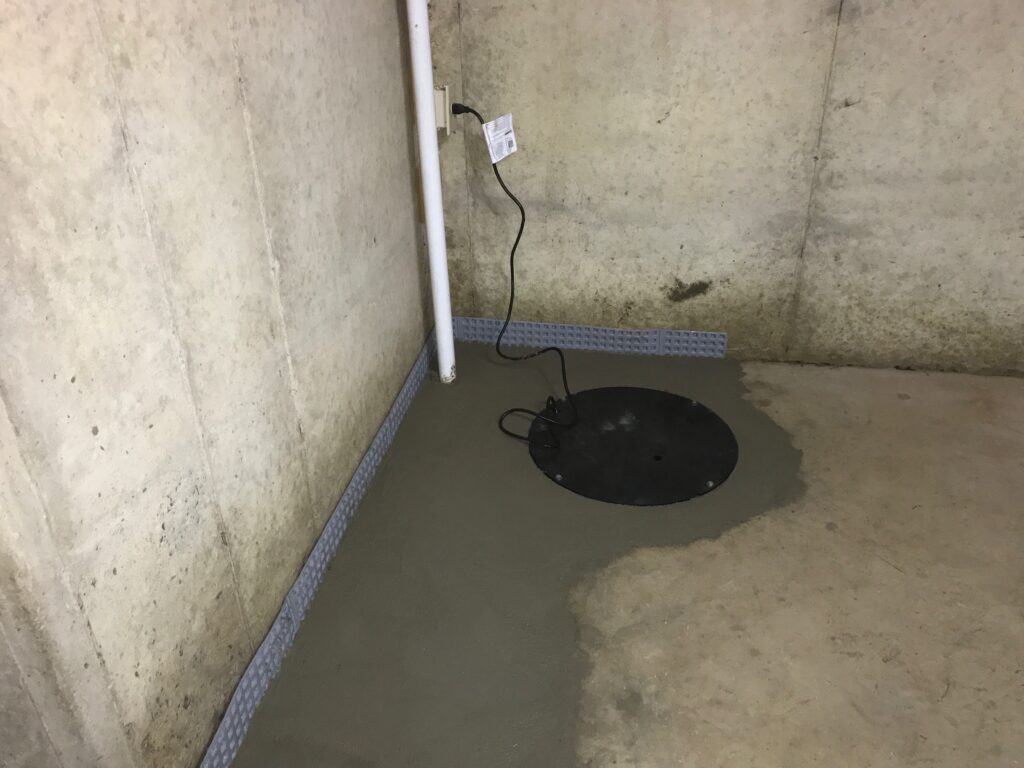
A storm is rolling through Bucks County, rain is hammering the windows, and you head downstairs to check on things — only to find water creeping across your basement floor. Your sump pump stopped working during the storm, and it picked the worst possible moment to do it.
We hear this from homeowners across Pennsylvania and New Jersey every storm season. The good news? You are not helpless. Knowing what to do in the next few minutes can make a real difference in how much damage you are dealing with afterward.
What to Do When Your Sump Pump Stopped Working During Storm?
When your sump pump stopped working during a storm, every minute counts. Before you panic, work through these steps in order. Some of these checks are quick and could get your pump running again without a service call.
Check If It Has Power
This sounds obvious, but it is the most common culprit. Storms in Bucks County and surrounding areas frequently cause localized power surges or outages that trip a breaker or pop a GFCI outlet — even if the rest of your house still has power.
Here is what to check:
- Make sure the pump is still plugged in. Vibration from a running pump can sometimes work the plug loose over time.
- Head to your breaker box and look for any tripped circuits. Reset them if needed.
- Check the GFCI outlet your pump is connected to. These outlets have a small “reset” button — press it and see if power is restored.
If the power checks out and the pump still is not running, move to the next step.
Inspect the Float Switch — Is It Stuck or Tangled?
The float switch is what tells your sump pump to turn on when water levels rise. If it gets stuck against the side of the pit, tangled in the pump cord, or jammed by debris, the pump will not activate no matter how high the water gets.
Carefully remove the pit cover and take a look. The float should move up and down freely. If it is pressed against the wall or wrapped around something, gently reposition it. This is one of the most common causes of sump pump repair calls we get after a heavy storm — and it is often a 30-second fix.
Check the Discharge Line for Blockages
Your sump pump moves water out of the pit and through a discharge line that exits your home. If that line is blocked — by debris, ice, or a collapsed section — water has nowhere to go and will back up into the pit no matter how hard the pump is working.
Go outside and locate where the discharge line exits your home. Make sure the opening is clear and that water is actually flowing out during pump cycles. If you find a blockage you cannot clear from the outside, this is a job for a professional sump pump repair technician.
Use a Wet/Dry Vac to Remove Standing Water Manually
If the pump is not coming back online quickly, do not wait. Grab a wet/dry vac and start pulling water out of the pit and any standing water on the floor. It is not a permanent solution, but removing water quickly reduces the risk of it reaching your drywall, flooring, and stored belongings.
Empty the vac outside or into a utility sink — just make sure you are draining it somewhere well away from the foundation.
Move Valuables Away From Water Immediately
While you are working on the pump, get anything off the floor that can be damaged. Boxes, furniture, electronics, important documents — move them to higher ground inside the house or upstairs. Water spreads fast on a basement floor, and what starts as a small puddle near the sump pit can reach the far corners of the basement within minutes during a heavy storm.
A little urgency here saves a lot of heartache later.
Why Do Sump Pumps Stop Working During a Storm?
Understanding why your sump pump stopped working during a storm helps you make smarter decisions about repair, replacement, and prevention going forward. In our experience serving homeowners across Bucks County and Montgomery County, these are the most common reasons a pump fails right when you need it most.
Power Outage
This is the number one reason sump pumps fail during storms. Heavy rain, wind, and lightning knock out power across Pennsylvania and New Jersey every year — and a standard sump pump is completely useless without electricity. If your pump is not equipped with a battery backup system, a power outage leaves your basement fully exposed no matter how new or well-maintained your pump is.
This is exactly why we recommend a battery backup sump pump to every homeowner we work with. It is one of the most effective upgrades you can make, and it costs far less than cleaning up a flooded basement.
Pump Overwhelmed by Water Volume
Sometimes the pump is running fine — it just cannot keep up. During an unusually heavy storm, groundwater can rise faster than your pump’s horsepower rating is designed to handle. This is especially common in Bucks County, where clay-heavy soil absorbs water slowly and pushes it toward foundations instead.
If your basement floods even when the pump is running, the unit may simply be undersized for your home and property. Proper sump pump maintenance includes periodically evaluating whether your pump still matches your water load — something our team checks during every service visit.
Float Switch Stuck or Broken
As we mentioned in the steps above, a float switch that is stuck, tangled, or broken will prevent the pump from turning on at all. Over time, debris builds up in the sump pit and the float mechanism wears down. Regular sump pump maintenance — including cleaning the pit and testing the float — catches this before it becomes a problem during a storm.
Clogged Discharge Line
A discharge line blocked by dirt, roots, small animals, or ice cannot move water away from your home. When the line is clogged, the pump runs but water stays in the pit — or worse, backs up. This is one of the more overlooked causes of basement flooding and something we inspect closely during routine sump pump maintenance visits.
Pump Age and Worn Motor
Sump pumps are built to last roughly 7 to 10 years under normal conditions. As the motor wears down, it becomes less reliable — and storms are exactly the high-demand moments that push an aging pump past its limit. If your pump is approaching or past that window, a failure during a storm is not bad luck. It is a worn-out machine doing what worn-out machines do.
If you are unsure how old your pump is, our team can assess it during a sump pump repair or maintenance visit and give you an honest recommendation on whether to repair or replace.
After the Storm: Assess the Damage
Once the rain stops and the immediate crisis is under control, your work is not done. What you do in the hours after a storm can be just as important as what you did during it. Water damage compounds quickly — what looks like a minor wet floor can turn into a much bigger problem if it is not addressed properly.
Here is how to approach the aftermath.
Document the Damage With Photos
Before you clean anything up, take photos and video of everything. Every wet surface, every damaged item, every waterline on the wall. Do this even if the flooding seems minor.
Homeowners insurance policies that include sump pump failure or water backup coverage will require documentation to process a claim. The more thorough your record, the stronger your position. Photograph the sump pit, the pump itself, the discharge line area, and any personal property that was affected. Time-stamp everything if you can.
Once you have documented the damage, you can start the cleanup — but do not skip this step in the rush to dry things out.
Watch for Mold Growth Within 24 to 48 Hours
This is the part most homeowners underestimate. Mold can begin developing on wet surfaces in as little as 24 to 48 hours, particularly in a basement environment where humidity is already elevated. Once mold takes hold, you are no longer dealing with a water problem — you are dealing with an air quality problem that affects your entire home.
After a basement flood, keep a close eye on walls, flooring, wood framing, and any stored items that got wet. Signs to watch for include a musty smell, visible dark spots on surfaces, and warping or bubbling on drywall.
Call a Professional Team
Some things after a basement flood are genuinely DIY-friendly — mopping up standing water, running fans and dehumidifiers, moving damaged items out. But there is a point where professional eyes make a real difference.
Call our team at Pressman Home Services if any of the following apply:
- Your sump pump did not come back online after working through the troubleshooting steps above
- You are seeing water intrusion through foundation walls or floor cracks, not just through the pit
- The water reached drywall, wood framing, or finished flooring
- You are noticing a musty smell within 24 hours of the flood
- Your pump is older than 7 to 10 years and this is not the first time it has struggled
We serve homeowners across Bucks County, Montgomery County, and surrounding areas of Pennsylvania and New Jersey. Our team is owner-operated, hands-on from start to finish, and we do not use subcontractors — so when we show up, you get our full attention and our full expertise.
Whether you need an emergency sump pump repair, a full replacement, or a mold assessment after a flooding event, we are the team to call.
Frequently Asked Questions
Does Homeowners Insurance Cover Sump Pump Failure?
It depends on your policy. Standard homeowners insurance typically does not cover water damage caused by a sump pump failure — but many insurers offer a water backup endorsement or rider that can be added to your policy for an additional premium. This endorsement generally covers damage from a backed-up drain, sump pump failure, or sewer overflow. We always recommend reviewing your policy carefully and speaking with your insurance agent before a storm event, not after. Having proper documentation of your sump pump’s condition and maintenance history can also help support a claim.
How Long Does a Battery Backup Sump Pump Last?
A battery backup sump pump typically runs for 5 to 7 hours of continuous pumping on a fully charged battery, though this varies depending on the model and how frequently the pump cycles. In a heavy storm where the pump is running constantly, that window can shorten. The battery itself usually needs to be replaced every 3 to 5 years as part of routine sump pump maintenance — even if the backup unit has never been used. Our team checks backup battery health during every sump pump maintenance visit so you are never caught off guard.
Can a Sump Pump Be Overwhelmed by Heavy Rain?
Yes, and it happens more often than most homeowners expect. Even a properly functioning pump has a gallon-per-hour rating — and during a severe storm, groundwater can enter the pit faster than the pump is rated to handle. This is particularly common in areas like Bucks County where clay-heavy soil does not absorb rainfall quickly, pushing water toward foundations at a higher rate. If your basement floods despite the pump running, the unit may be undersized for your property. A sump pump repair visit from our team can help determine whether you need a higher-capacity pump or a secondary backup unit.
How Do I Know If I Need a Replacement vs. a Repair?
A good rule of thumb is this — if your pump is under 7 years old and this is the first time it has failed, a sump pump repair is usually the right call. If the pump is 7 to 10 years old, has failed more than once, makes grinding or rattling noises during operation, or struggled to keep up during a moderate storm, replacement is likely the smarter long-term investment. Continuing to repair an aging pump can cost more over time than replacing it outright, and it leaves you exposed to another failure at the worst possible moment. Our team gives honest assessments — we will tell you straight whether a repair makes sense or whether a new unit is the better move.
Sump Pump Stopped Working During a Storm? Call Pressman Home Services
When your sump pump stops working during a storm, you need a team that shows up, knows what they are doing, and gets it fixed right the first time. That is exactly what Pressman Home Services delivers to homeowners across Bucks County, Montgomery County, and surrounding areas of Pennsylvania and New Jersey.
We are a family-run, owner-operated company led by Master Plumber Ross Pressman. Every job — whether it is an emergency sump pump repair, a full pump replacement, a battery backup installation, or a post-flood mold assessment — is handled by our own hands-on team from start to finish. No subcontractors. No shortcuts. Just reliable, honest work from people who are genuinely invested in protecting your home.
Here is what homeowners across our area count on us for:
- Emergency sump pump repair when a pump fails during or after a storm
- Sump pump replacement for aging or undersized units that can no longer keep up
- Battery backup i bnstallation so your basement stays protected even when the power goes out
- Routine sump pump maintenance to catch problems before they become emergencies
- Professional basement waterproofing for homeowners who want long-term protection beyond the pump itself
We have worked in basements across Bucks and Montgomery counties for years. We know the local soil conditions, the housing stock, the weather patterns, and the specific challenges that PA and NJ homeowners face when storm season hits. That local knowledge makes a real difference in the quality of the work we do and the advice we give.
Do not wait until the next storm to find out your pump is not ready. Whether you are dealing with an active situation right now or want to get ahead of the problem before the next heavy rain, our team is here to help.
Get in touch with our team today and let us make sure your basement is protected.