If you live in an older home, chances are you’ve seen the signs—musty smells, damp walls, pooling water after heavy rain. Basement moisture is a common (and frustrating) issue for many homeowners, especially in aging properties. And when it comes to protecting your home’s foundation, nothing is more important than a good waterproofing system.
But here’s where things get tricky: interior vs. exterior waterproofing for older basements—which one actually works better? Is one more cost-effective than the other? Can you get away with just sealing cracks from the inside, or is digging around your home’s foundation the only real fix?
Why Older Homes Face Basement Water Problems
If you’ve ever owned or lived in an older house, you know that its charm often comes with a side of upkeep. One of the most common and costly headaches? A leaky basement. When it comes to interior vs. exterior waterproofing for older basements, understanding why these homes are so vulnerable to moisture is the first step in solving the problem.
The Age of Materials
Most older homes were built long before modern waterproofing technology existed. Back then, builders used porous materials like stone, brick, or concrete blocks without modern vapor barriers or drainage systems. Over time, these materials can break down or shift, letting groundwater creep in.
Think of it like an old sponge. What started off as a solid structure now absorbs water little by little—especially after years of freeze-thaw cycles, rain, and soil pressure pushing in from the outside.
Settling Foundations and Soil Pressure
All homes settle over time, but older ones have had decades to move and shift. This can lead to cracks in the foundation, gaps around windows or doors, and uneven flooring—all of which allow water to enter the basement. Combine that with hydrostatic pressure (that’s the fancy term for water in the soil pushing against your foundation), and you’ve got a recipe for leaks.
Imagine trying to hold back a wall of water with an old brick—eventually, it’s going to seep through the cracks.
Poor or Outdated Drainage Systems
Many older homes either lack proper drainage or rely on outdated systems that just can’t keep up with today’s heavier rainfall. Back in the day, builders might have relied on simple downspouts and a bit of sloped grading. But without modern sump pumps, drain tiles, or waterproof membranes, moisture doesn’t have a clear path to escape.
And if your gutters are clogged, your downspouts are missing extensions, or your yard slopes toward the house? That moisture is heading straight for your basement.
Waterproofing Wasn’t a Priority… Yet
It’s easy to forget that waterproofing just wasn’t top of mind in construction 50 or 100 years ago. There were no building codes requiring exterior membranes, no high-tech sump pumps, and definitely no interior drainage systems designed to reroute water. These homes were often built to withstand the elements—but not necessarily to stay bone dry.
As a result, homeowners today are left playing catch-up with solutions like interior vs. exterior waterproofing for older basements, trying to retrofit modern protection into a vintage structure.
Tree Roots and Landscape Changes
Finally, many older homes are surrounded by mature trees, gardens, and landscaping that has changed dramatically over time. Tree roots can disrupt foundation walls and underground drainage, while years of soil erosion or additions to the property can mess with natural water flow. It all adds up to more pressure—and more moisture—finding its way into your basement.
What Is Interior Basement Waterproofing?
When water starts seeping into your basement, your first instinct might be to tackle it from the inside—and that’s exactly what interior basement waterproofing is all about. It focuses on controlling and redirecting water after it has entered or started to seep into your basement. While it doesn’t stop moisture from getting in at the source like exterior methods do, it can be an extremely effective solution—especially for older homes with unique structural challenges.
So, how does it work? And when is it the right choice in the debate of interior vs. exterior waterproofing for older basements? Let’s break it down.
How Interior Basement Waterproofing Works
There’s no one-size-fits-all system, but most interior waterproofing setups use a combination of the following:
Drain Tiles (Interior French Drains)
These are perforated pipes installed along the inside perimeter of your basement floor, just beneath the slab. They collect water as it seeps in through walls or floors and direct it to a sump pump. Think of it as building a hidden moat inside your home that collects water before it causes damage.
For older basements, this is especially useful because it doesn’t require major excavation or disruption to the outside of your foundation. You can keep your landscaping intact and avoid costly digging.
Sump Pumps
A sump pump is the real workhorse of interior waterproofing. It sits in a small pit—called a sump basin—and actively pumps water out and away from your home. When your interior drain system collects water, it flows into the basin, and the pump does the rest.
If your basement regularly floods or has pooling water during heavy rains, a sump pump system is essential. It’s often the first line of defense and a relatively quick upgrade for older homes.
Sealants and Waterproof Coatings
Interior wall sealants are often used to block minor seepage through porous concrete or masonry walls. They’re brushed or sprayed onto interior walls and can help reduce humidity, minor leaks, and that telltale musty smell.
While this won’t fix larger structural issues or exterior water pressure, it’s a good add-on to reduce moisture buildup—especially in older basements with porous, unsealed walls.
Why It’s Used in Older Basements
Interior basement waterproofing is often the preferred approach for older homes because it’s less invasive. If the structure is fragile, the foundation is difficult to access, or landscaping would be costly to disturb, it makes sense to work from the inside.
Here’s why homeowners choose interior systems:
- Faster installation – Most systems can be completed in a few days.
- Lower cost – No heavy excavation means lower labor and equipment costs.
- Less disruption – No need to dig up patios, decks, or landscaping.
- Effective for moderate water problems – Especially good for managing seepage, small leaks, or seasonal flooding.
What Is Exterior Basement Waterproofing?
When water is making its way into your basement, one way to stop it is at the source—before it ever touches your foundation. That’s where exterior basement waterproofing comes in. Unlike interior methods that deal with water after it enters, exterior waterproofing blocks moisture from the outside, acting like a shield wrapped around your home’s foundation.
For homeowners comparing interior vs. exterior waterproofing for older basements, this method is often considered the gold standard. But it’s also the more involved and expensive option. Let’s look at how it works and why it might be worth the investment—especially for older homes with chronic water issues.
How Exterior Basement Waterproofing Works
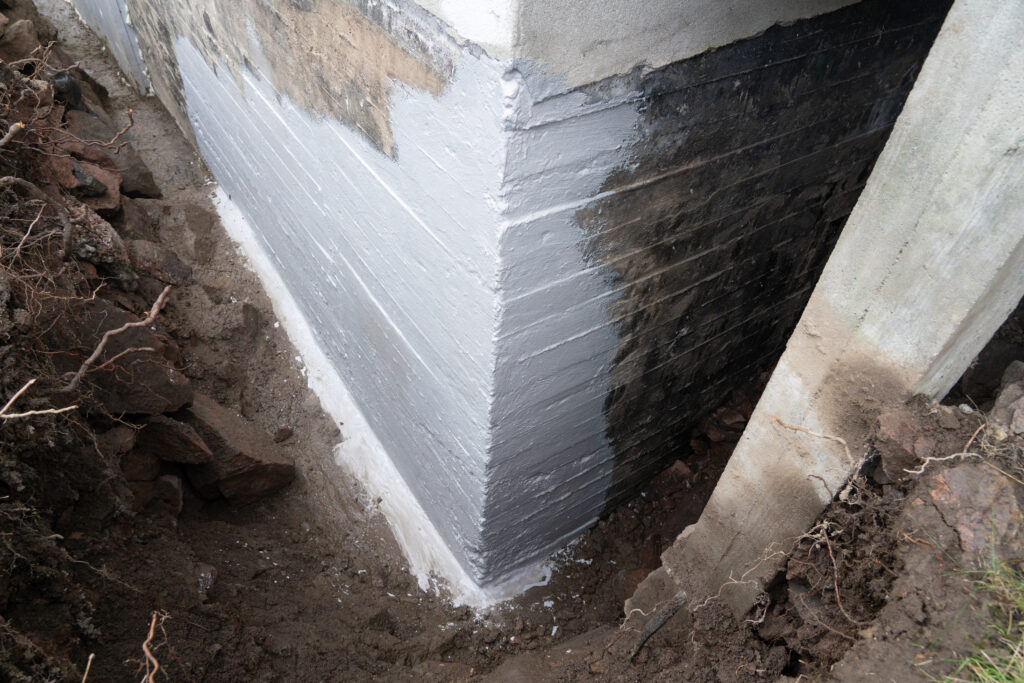
Exterior waterproofing involves excavating around the perimeter of your home’s foundation to expose the walls. Once the foundation is exposed, a series of protective materials and systems are installed to keep water out.
Excavation
First, contractors dig down to the base of your foundation—sometimes 6 to 8 feet or more—so they can work directly on the foundation walls. This allows them to inspect for cracks or damage and prep the surface for sealing.
This part of the job is the most labor-intensive and disruptive. For older homes, it often means working around mature landscaping, patios, porches, or other hardscaping features.
Waterproof Coatings and Sealants
Once exposed, the foundation is cleaned and coated with a waterproof sealant or a thick rubberized membrane. This is the primary moisture barrier. Some homes may also use bentonite clay or elastomeric coatings to provide flexibility and additional protection.
These coatings are designed to resist the constant pressure of groundwater, preventing moisture from seeping into porous materials like brick or concrete.
Drainage Systems (Exterior Drain Tiles)
Along the base of the foundation wall, a perforated drain pipe—called an exterior drain tile—is installed to redirect water away from the home. The pipe is typically surrounded by gravel and then covered with a filter fabric to prevent clogs from soil or debris.
This system collects water from around the home and moves it away from the foundation, often discharging it to a storm drain or daylight outflow.
Protective Membranes and Panels
To further protect the foundation, a drainage board or dimple membrane is sometimes installed over the waterproof coating. These materials create a channel that directs water down into the exterior drain system and adds another layer of insulation against soil pressure.
Why It’s a Long-Term Solution
When done right, exterior basement waterproofing offers lasting protection that doesn’t rely on managing water after it’s already in your basement. That’s a huge advantage in older homes where constant water exposure has weakened the structure or where interior solutions aren’t enough.
Key benefits include:
- Stops water at the source – No more damp walls or floors.
- Prevents long-term foundation damage – Protects the structural integrity of your home.
- Reduces mold and air quality issues – Keeps the basement dry and breathable.
- Works for severe water intrusion – Ideal for homes with chronic flooding or high water tables.
For older basements with crumbling mortar, failing walls, or bowing foundation sections, exterior waterproofing may be the only truly permanent fix.
Interior vs. Exterior Waterproofing for Older Basements: How to Choose Between These Two
So, which option is right for your home?
The best waterproofing solution depends on a few key things: the age and condition of your basement, the severity of the water problem, your budget, and how much disruption you’re willing to tolerate. Some homes benefit from a mix of both methods, while others can get by with just one.
To help make your decision easier, here’s a side-by-side look at interior vs. exterior waterproofing for older basements:
Feature | Interior Waterproofing | Exterior Waterproofing |
Purpose | Manages water after it enters | Blocks water before it reaches the foundation |
Best For | Minor to moderate seepage, occasional flooding | Severe leaks, high water tables, foundation protection |
Common Components | Sump pump, interior drain tile, wall sealants | Excavation, exterior membranes, drain tiles, foundation coating |
Disruption | Minimal — done from inside the home | Major — requires digging around entire foundation |
Installation Time | 2–5 days (on average) | 1–2 weeks (depending on conditions) |
Cost | More budget-friendly | Higher upfront investment |
Effectiveness for Older Basements | Very effective for managing existing water entry | Most effective for long-term structural protection |
Maintenance Required | Periodic sump pump checks, monitor for new cracks | Minimal if installed correctly |
Impact on Home’s Structure | No structural changes | Can help preserve and reinforce aging foundation walls |
The Hybrid Approach: Sometimes You Need Both
Here’s the reality—interior vs. exterior waterproofing for older basements isn’t always an either-or decision. In many cases, especially with older homes, the most effective long-term strategy combines both. For example:
- Use exterior waterproofing to block water at the source and protect the foundation.
- Add interior waterproofing (like a sump pump) as a backup system for heavy rains or emergencies.
This dual approach not only protects your investment but also gives you peace of mind year-round.
Call Pressman Home Services for Basement Protection
Whether you’re dealing with musty smells, mysterious puddles, or full-on flooding, one thing is clear: water doesn’t belong in your basement. And if you’re in an older home, it’s not a matter of if you’ll have water issues—it’s when. That’s why it’s so important to understand the differences between interior vs. exterior waterproofing for older basements, and to work with professionals who know how to protect aging foundations the right way.
At Pressman Home Services, basement waterproofing isn’t just something we offer—it’s something we specialize in, especially for older homes throughout our community. We understand the quirks and challenges of aging structures, and we design custom waterproofing systems that actually work—not just for now, but for the long term.
Whether you’re leaning toward an interior system, considering full exterior protection, or wondering if a hybrid solution might be best, our team is here to guide you with honest answers and real expertise. No pressure. No guesswork. Just solid protection for your home’s most vulnerable space.
Don’t Wait for the Next Rainstorm to Flood Your Basement
If you’re tired of dealing with leaks, smells, or water damage—or want to protect your home before problems start—contact Pressman Home Services today. We offer thorough inspections, smart waterproofing solutions, and experienced crews who treat your home with care.