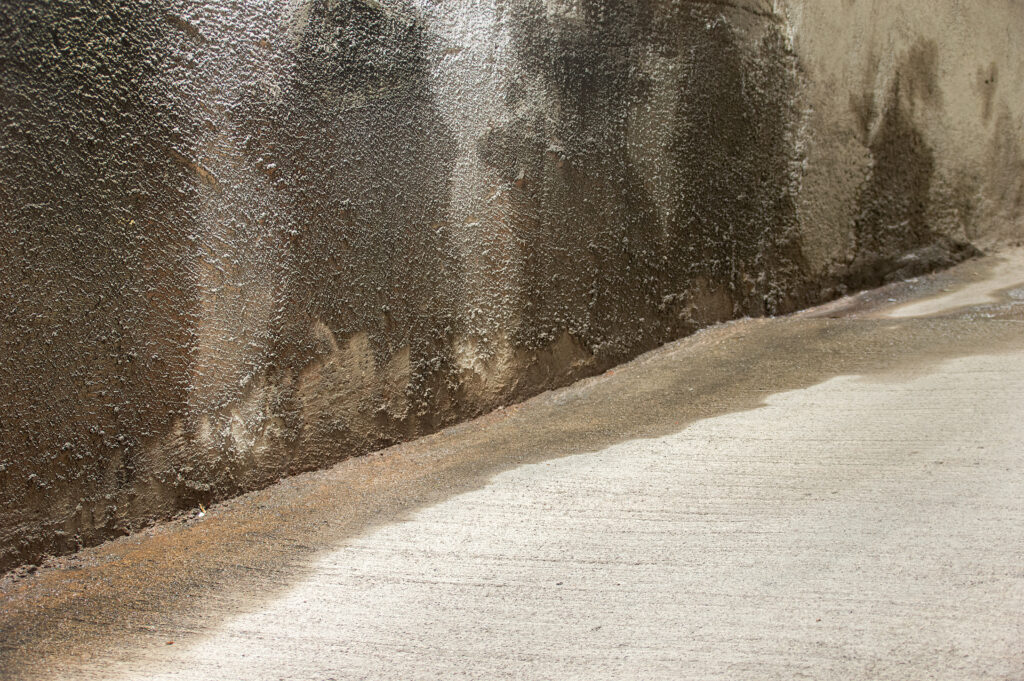
The storm passes, and you head downstairs to find a puddle on the floor, a dark stain on the wall, or a damp smell that wasn’t there yesterday. If you’re asking, “Why does my basement flood when it rains?”, you’re asking the right question. Mopping up treats what you can see. Finding where the water comes from is what keeps it from coming back.
The answer is rarely random. Water follows a handful of predictable paths into a basement, and the clues usually point to one of them. At Pressman Home Services, we inspect wet basements across Bucks and Montgomery County, Chester County and nearby New Jersey every storm season. Here’s what we look for.
Why Does My Basement Flood When It Rains?
It comes down to gravity, saturated soil and the weakest point in your foundation. Your basement is the lowest part of your home, surrounded by soil. During heavy or long rain, that soil fills with water faster than it can drain, and the water moves toward the easiest way in: a crack, a seam, a gap around a pipe, or the joint where the walls meet the floor. That’s why water in your basement after heavy rain tends to show up in the same spots, storm after storm.
It also explains why a neighbor’s basement can stay dry while yours floods. Yard grading, where the downspouts empty, a working sump pump, foundation age and how deep the basement sits relative to groundwater all differ from house to house. A few inches of slope can be the whole difference.
Where the Water Shows Up Tells You the Cause
Before choosing any fix, notice exactly where the water enters. The entry point says a lot about what’s driving it.
The Wall-Floor Joint
A thin line of water along the base of the wall usually means groundwater pressure. The walls and floor were built separately, and the seam between them is one of the first places water gets through. Read more about water coming in where basement walls meet the floor.
Wall Cracks and Stair-Step Mortar Joints
Wet streaks running down from a crack, or stair-step cracks along the mortar lines of a block wall, point to water forcing its way through the wall itself. White, chalky residue (efflorescence) is a sign that water regularly moves through the masonry, even if you’ve never seen a puddle.
Up Through the Floor Slab
Water seeping up through floor cracks, or pooling mid-floor with no clear source, means groundwater has risen above the bottom of the slab. It’s common in low-lying homes and near creeks, and it usually appears after several days of rain.
Floor Drains
Water coming up out of a floor drain is a plumbing issue, not a waterproofing one, especially if it smells foul. Our sister company, Pressman Plumbing, handles basement floor drain backup during heavy rain.
5 Causes of Basement Flooding in Pennsylvania
These are the causes of basement flooding we see most often in Pennsylvania homes.
Heavy Rain and Poor Yard Drainage
Your yard should move water away from the house. Over time, soil settles and landscaping builds up until the ground slopes toward the foundation instead. If water pools near the house during a storm, the grading is working against you.
Leaking Foundation Cracks
Freeze-thaw cycles, shifting clay and age all crack foundation walls. A crack that stays dry most of the year can run steadily once the soil outside is saturated, and any crack that lets water in needs to be addressed at the source.
Sump Pump Failure
When the sump pump fails, rising groundwater overflows the pit within hours. Stuck floats, clogged intakes and worn motors are common causes, but power outages during storms are the biggest one, which is why a battery backup matters. Learn the signs your sump pump is failing.
Overflowing Gutters and Short Downspouts
Clogged gutters and downspouts that end at the foundation dump roof water exactly where you don’t want it. This is one of the most common reasons a basement leaks in the same corner every time it rains.
Window Wells and Below-Grade Openings
Window wells without covers or working drains fill like buckets and leak through the window frame. Bulkhead doors, stairwells and utility openings in the foundation wall are easy-to-miss entry points too.
Basement Flooding in Bucks, Montgomery, Chester and South Jersey
Basement flooding in Pennsylvania is especially common in our region for three reasons: slow-draining clay soils, older foundations, and creeks that raise local groundwater. Stone foundations in historic towns and 1950s block walls in communities like Levittown let in far more water than newer poured foundations with exterior drainage. Homes near the Neshaminy, Perkiomen and other area creeks also see the water table rise fast in big storms.
The Pennsylvania Department of Environmental Protection’s 2024 Climate Impacts Assessment found that rain across the state is falling in fewer but heavier events, and it ranks flooding as the highest-risk hazard Pennsylvania faces. Here in the southeast, the trend is even sharper. Research summarized by Penn State Extension found that days with 4 to 6 inches of rain increased 59% between 1979 and 2014, with most of that increase in the eastern half of the state.
What to Do When Your Basement Floods in a Rainstorm
Put safety first. If water is near outlets, appliances or the electrical panel, stay out of it. Only shut off power if you can reach the panel from a completely dry spot; otherwise, call your electric utility.
Next, check your sump pump if you can reach it safely. If it has stopped, look for a tripped breaker or a stuck float switch. If it’s running nonstop and losing ground, water is coming in faster than it can keep up.
Then take photos and videos of exactly where the water is entering and what was damaged. They help an inspector find the source faster, and they’re useful if you file a claim. Contact your homeowners insurance company to ask what your policy covers, since coverage often depends on how the water got in. For significant damage or a complicated claim, a licensed public adjuster can help. They work for you, not the insurance company. Even if nothing was damaged this time, water in your basement after heavy rain isn’t normal. It means water has found a way in, and it will use that path again.
Finally, watch for mold. It can start growing on damp drywall, carpet and cardboard within a day or two. Run a dehumidifier, remove wet items and watch for musty smells. If you see growth, professional mold removal addresses both the mold and the moisture behind it.
Long-Term Fixes When Water Keeps Coming Back to Your Basement
Stopping the next flood means dealing with where the water comes from and giving it a controlled way out. Depending on what an inspection finds, that may include:
- Interior drainage systems that collect water at the wall-floor joint and under the slab and carry it to a sump pump, relieving pressure instead of fighting it.
- French drains that intercept groundwater and redirect it away from the foundation.
- Exterior waterproofing, which adds a waterproofing membrane and drainage to the outside of the foundation wall.
- Sump pumps with battery backup that keep working when storms knock out the power.
At Pressman Home Services, our owners are onsite from the first inspection to the final walkthrough, with no subcontractors. We trace the water to its source before recommending anything.. If an inspection turns up a plumbing problem instead, such as a backed-up drain line or a leaking pipe, our sister company, Pressman Plumbing, takes care of it, so one family-run team handles the whole job.
Frequently Asked Questions
Can a dehumidifier stop my basement from flooding?
No. A dehumidifier controls moisture in the air, which helps with musty smells and condensation, but it can’t stop liquid water from coming through walls, cracks or the floor. If water is getting in when it rains, the entry point has to be fixed first. After that, a dehumidifier is a good way to keep the space comfortable and dry.
Can repeated flooding damage my foundation?
Over time, yes. Each storm that pushes water through the same cracks and mortar joints slowly erodes the masonry, widens existing cracks and keeps the walls wet through Pennsylvania’s freeze-thaw cycles. One flood is rarely a structural emergency, but a basement that takes on water storm after storm is wearing down.
Do I have to disclose basement flooding when selling my home in PA?
Pennsylvania sellers are required to disclose known material defects, and the standard seller disclosure form asks about water leakage and dampness in the basement. Fixing the problem at its source, and keeping records of the work, can make that conversation with buyers much easier. Your real estate agent or attorney can tell you exactly what to disclose for your situation.
When is the best time to waterproof a basement?
Waterproofing can be done in any season, and interior systems are commonly installed even in the coldest months. The best time to schedule an inspection is soon after a storm, while stains, damp spots and entry points are still easy to see. Fixing the problem before the wet spring season keeps the next big storm from becoming your next flood.
Keeping Your Basement Dry Every Storm Season
When your basement floods, it’s telling you something specific about your soil, your foundation and the path water is using to get in. Find that path and fix it at the source, and the storms can keep coming without the water following them inside.
If you’re dealing with water in your basement after heavy rain, get in touch with our team through our contact page. We’ll find where the water is getting in and walk you through the options to keep your basement dry for good.