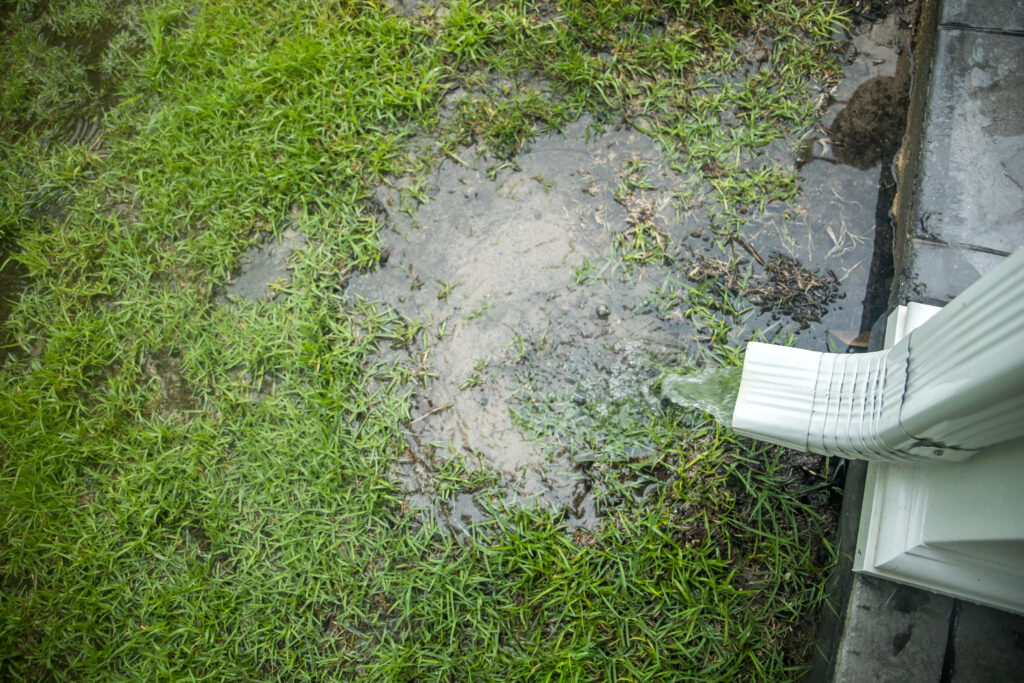
If you own an older home in Bucks County or the surrounding Pennsylvania and New Jersey area, you’ve probably noticed it — water sitting in the yard after a rainstorm, soft soggy patches near the foundation, or a basement that smells damp every spring. These are classic signs of poor yard drainage, and in older homes, they rarely fix themselves.
The good news is that poor yard drainage solutions for old houses exist, they work, and they don’t have to mean tearing up your entire yard. Whether the problem is a grading issue that’s been slowly getting worse for decades, a collapsed drainage system from another era, or soil that’s simply stopped doing its job, there are proven ways to fix it — and protect your home for the long haul.
Why Old Houses Are More Prone to Drainage Problems
Older homes were built in a different era, and drainage standards have changed dramatically over the decades. Many houses constructed before the 1980s went up without the drainage infrastructure we consider standard today — no French drains, no graded landscaping, and in some cases, no real drainage plan beyond “let the ground absorb it.”
After 50, 60, or 80+ years, that approach catches up with you. Here’s why older homes struggle more than newer ones:
- Compacted, clay-heavy soil — Much of Bucks County sits on clay-rich soil that absorbs water poorly. Decades of compaction make it even worse.
- Grading that has shifted over time — Natural settling can slowly reverse a yard’s slope, redirecting water toward the foundation instead of away from it.
- Deteriorated drainage systems — Clay tile drains, cast iron pipes, and other mid-century drainage infrastructure crack, collapse, and clog over decades — often without any visible signs above ground.
- No original drainage infrastructure — Many older homes were simply built without it.
Understanding why your home is vulnerable is the first step toward finding poor yard drainage solutions that actually fix the root cause — not just the symptoms.
Signs You Have Poor Yard Drainage
Poor yard drainage doesn’t always announce itself dramatically. Sometimes it shows up as a soggy corner of the lawn you’ve learned to work around. Other times it’s something more serious, like a wet basement after every heavy rain. Either way, catching the warning signs early can save you from much costlier repairs down the road. Here’s what to look for.
Standing Water After Rain
The most obvious sign is water that pools in your yard after a rainstorm and takes longer than 24 to 48 hours to disappear. Some standing water is normal during heavy downpours, but if it’s happening after moderate rainfall or sitting for days at a time, your yard isn’t draining the way it should. Pay close attention to areas near your foundation, along the side of the house, or at the base of any slope in your yard — these are the spots where water pooling around the house tends to concentrate first.
Soggy or Muddy Patches in the Yard
Persistently soft, spongy, or muddy areas in your lawn — even days after it last rained — are a reliable indicator of poor yard drainage. These patches often develop where water is moving underground toward a low point or where the soil has become so saturated it can no longer absorb anything. In older homes with clay-heavy soil, this is especially common along the sides and rear of the property.
Water Stains on Foundation Walls
Take a walk around your home’s exterior and look at the foundation. White chalky streaks, rust-colored stains, or dark watermarks on the foundation walls are signs that water is consistently making contact with the structure. These stains — called efflorescence — form when water moves through concrete or masonry and deposits minerals on the surface. It’s a quiet but telling sign that water pooling around the house is putting direct pressure on your foundation.
Basement Dampness or Flooding After Heavy Rain
If your basement feels damp, smells musty, or shows water intrusion after rainstorms, poor yard drainage is often the underlying cause. Water that isn’t directed away from your home at the surface will eventually find its way through foundation walls, floor joints, and cracks. In older homes, where foundations may already have minor settling cracks or aging mortar, this path of least resistance is even more accessible. A damp basement isn’t just uncomfortable — it’s a condition that encourages mold growth and long-term structural damage.
Erosion or Bare Patches in the Lawn
When water moves across your yard with enough force or consistency, it strips away topsoil and kills grass. Bare patches, gullies, or areas where mulch keeps washing away are signs that surface water is running where it shouldn’t. Erosion near the foundation is particularly concerning — it can expose the base of your foundation over time and accelerate drainage problems that are already underway.
Poor Yard Drainage Solutions for Old Houses
Once you’ve identified the problem, the next question is what to do about it. The right solution depends on where the water is coming from, how your yard is graded, and what drainage infrastructure — if any — is already in place. For most older homes in the Bucks County and Montgomery County area, the fix involves one or more of the following approaches.
French Drain Installation: The Most Effective Fix for Older Homes
If there’s one poor yard drainage solution that comes up more than any other in older homes, it’s the French drain — and for good reason. A French drain is a gravel-filled trench containing a perforated pipe that collects groundwater and surface water and redirects it away from your home. It works with the natural movement of water, intercepting it before it reaches your foundation and channeling it to a safe discharge point.
For older homes that were built without any drainage infrastructure, french drain installation is often the most effective and long-lasting fix available. It addresses the root cause directly — excess water near the foundation — rather than simply managing the symptoms after the fact.
French drains can be installed along the perimeter of the foundation, across low-lying areas of the yard, or at the base of slopes where water naturally collects. The right placement depends on a thorough assessment of how water moves across your specific property. At Pressman Home Services, our team evaluates each property individually before recommending a system — because a French drain installed in the wrong location won’t solve the problem, and we’d rather get it right the first time than send you back to square one.
French drain installation for an older home also requires accounting for what’s already underground. Older properties often have existing pipes, utility lines, or remnants of previous drainage attempts that need to be identified before any digging begins. This is part of why experience matters — and why we handle every french drain installation old house project with a careful, hands-on approach from start to finish.
Regrading the Yard
Sometimes the most important poor yard drainage solution isn’t a pipe or a drain at all — it’s the slope of the ground itself. Proper grading directs surface water away from your foundation before it ever has a chance to pool or seep in. The general standard is a slope of at least six inches over the first ten feet away from the foundation.
In older homes, this grading has often shifted due to decades of natural settling, landscaping changes, or soil erosion. Regrading involves reshaping the yard so water flows in the right direction — away from the house. It’s not always a dramatic excavation project. In many cases, strategic addition of soil in key areas is enough to correct the slope and dramatically improve drainage.
Our team can assess your yard’s current grade as part of a drainage evaluation and let you know whether regrading alone — or in combination with another solution — is the right path forward for your property.
Drain Cleaning: Clearing What’s Already There
Before assuming you need new drainage infrastructure, it’s worth checking whether the existing system is simply blocked. Many older homes do have drainage pipes, but after decades of use they’ve become clogged with roots, sediment, and debris. A drain that was installed in 1965 and never serviced is likely not performing anywhere close to its original capacity.
Professional drain cleaning can restore flow to an existing system without the need for full replacement. At Pressman Home Services, we offer drain cleaning services that clear blockages and assess the condition of your existing pipes — giving you a clear picture of whether cleaning is enough or whether more extensive work is needed. Sometimes the solution to water pooling around the house is simpler than homeowners expect.
Sump Pump Installation: Your Last Line of Defense
Even with the best exterior drainage in place, some water may still find its way into an older home’s basement — especially during heavy storms or rapid snowmelt. That’s where a sump pump comes in. A sump pump sits in a pit at the lowest point of your basement and automatically pumps out water before it can accumulate and cause damage.
For older homes with a history of basement water intrusion, sump pump installation is often a smart complement to exterior drainage work. It handles what gets through so your basement stays dry even when conditions are working against you. We install and service sump pumps throughout Bucks and Montgomery counties, and we can help you determine whether a standard pump, a battery backup system, or a combination of both makes the most sense for your home.
Basement Waterproofing: Protecting Your Home From the Inside Out
When poor yard drainage has been an ongoing issue for years, the foundation and basement walls of an older home may need more than just exterior fixes. Interior and exterior basement waterproofing systems create a barrier that prevents water from penetrating the structure even when outside conditions are challenging.
Exterior waterproofing involves applying a protective membrane to the outside of your foundation walls — best done in combination with drainage improvements so water is both redirected and blocked. Interior waterproofing systems, including interior drainage channels and vapor barriers, manage any water that does make it through and direct it safely to a sump pump.
At Pressman Home Services, basement waterproofing is one of our core specialties. For older homes where drainage problems have been building for decades, a combined approach — fixing the exterior drainage and reinforcing the basement — gives you the most complete and lasting protection available.
Why Old Houses Need a Professional Drainage Assessment
In Pennsylvania, older homes come with layers of history that aren’t always visible from the surface. Decades of settling, previous repair attempts, clay-heavy soil, and aging underground infrastructure all interact in ways that make drainage problems genuinely complex to diagnose. What looks like a simple grading issue on the surface may have a collapsed clay tile drain underneath, or a foundation crack that’s been slowly admitting water for years. Our team has worked across Bucks and Montgomery counties long enough to know that in older PA homes, a thorough eyes-on assessment almost always reveals something a homeowner wouldn’t have caught on their own.
In New Jersey, the stakes around drainage work carry an additional layer — depending on your municipality and the scope of the project, drainage improvements may require permits before work begins. Skipping that step can create headaches when it comes time to sell, refinance, or file an insurance claim. Beyond the permitting question, it’s worth being direct: DIY drainage fixes in older homes are rarely a real solution. Redirecting water without understanding the full picture of how it moves across your property can shift the problem rather than solve it — and in some cases make things worse. Poor yard drainage solutions for old houses work best when they’re designed by someone who has actually assessed the property, not approximated from a YouTube tutorial.
Answers to Common Yard Drainage Questions From Older Homeowners
How Do I Know if My Old House Has a Drainage Problem?
The most reliable signs are standing water that lingers in your yard for more than 24 to 48 hours after rain, soggy or muddy patches that never fully dry out, water stains on your foundation walls, and a basement that feels damp or shows moisture after storms. If your home is more than 40 years old and you’ve never had a drainage assessment done, there’s a good chance something has shifted — even if the signs are subtle. When in doubt, having a professional take a look costs far less than waiting until the problem becomes impossible to ignore.
Can Poor Yard Drainage Damage My Foundation Over Time?
Absolutely — and it’s one of the more serious consequences of leaving water pooling around the house unaddressed. Water that consistently sits against a foundation creates hydrostatic pressure, which over time can cause cracks, bowing walls, and deteriorating mortar. In older homes where the foundation may already have minor settling cracks, that pressure finds its way in faster. Mold, structural damage, and compromised indoor air quality are all downstream effects of a drainage problem that started outside in the yard.
What Is a French Drain and Is It Right for My Older Home?
A French drain is a gravel-filled trench with a perforated pipe that collects and redirects water away from your home. It’s one of the most effective and commonly recommended poor yard drainage solutions for older homes precisely because it works with the natural movement of water rather than fighting it. Whether french drain installation is right for your older home depends on where water is entering, your yard’s grade, and what’s already underground — which is why a proper site assessment always comes before a recommendation. In many cases it’s the single best investment an older homeowner can make for long-term drainage control.
How Much Does Yard Drainage Repair Cost for an Older House?
Every property is different, and the cost of poor yard drainage solutions depends on the scope of the problem, the size of the yard, what’s already underground, and which combination of solutions is needed. We don’t publish fixed prices because an honest estimate requires actually seeing the property. What we can tell you is that addressing drainage early — before it causes foundation damage, basement flooding, or mold — is almost always significantly less expensive than dealing with those consequences later. Reach out through our contact page and we’ll set up a free estimate.
Can I Fix Poor Yard Drainage Myself or Do I Need a Professional?
For very minor surface grading adjustments, a motivated homeowner with the right tools can sometimes make a meaningful difference. But for most older homes — where the drainage challenges involve compacted soil, deteriorated pipes, foundation proximity, and years of accumulated problems — DIY fixes tend to move water rather than manage it. Without understanding the full picture of how water moves across your property, it’s easy to redirect a problem from one area straight into another. A professional assessment ensures the solution is designed around your specific property, not a general approximation of it.
Pressman Home Services Keeps Older Homes Dry — Get Your Free Estimate Today
Older homes have character, history, and craftsmanship you won’t find in new construction — but they also come with drainage challenges that deserve a hands-on, experienced approach. Poor yard drainage solutions for old houses aren’t one-size-fits-all, and the right fix depends on understanding your specific property, its history, and how water actually moves across it.
At Pressman Home Services, we’re a family-run, owner-operated company serving homeowners across Bucks County, Montgomery County, and surrounding parts of Pennsylvania and New Jersey. Master Plumber Ross Pressman and our team are onsite from start to finish — no subcontractors, no shortcuts. Whether your older home needs French drain installation, regrading, drain cleaning, sump pump installation, basement waterproofing, or a combination of all of the above, we’ll assess the full picture before recommending anything and make sure the work is done right the first time.
Water problems in older homes don’t get better on their own. The sooner drainage issues are addressed, the less damage they do — and the less expensive the fix. If you’ve noticed water pooling around your house, a damp basement, or any of the warning signs covered in this guide, don’t wait for the problem to show up in a bigger way.
Get in touch with our team today for a free estimate and let us take a look at what’s going on. We serve homeowners throughout Bucks and Montgomery counties and surrounding PA and NJ communities — and we’d be glad to help.