If you’ve ever walked down into your basement after a rainy day and caught the unmistakable scent of damp concrete—or worse, seen puddles forming where your floor should be dry—you already know how stressful water intrusion can be. Water doesn’t need an invitation to sneak into your home, and Pennsylvania’s unpredictable weather doesn’t help. The good news? You can stop moisture in its tracks before it even reaches your foundation. The secret lies in choosing the right exterior drainage solutions for basement waterproofing.
Think of your home like an umbrella. A solid roof keeps you dry from above, but without proper drainage around your foundation, it’s like walking around with water sloshing in your boots. Protecting your basement means managing the water outside your home first. In this blog, we’ll walk you through why exterior drainage is crucial, what causes water to pile up around your foundation, the most effective solutions available, and when it’s time to call in the pros.
Why Exterior Drainage Matters for Basement Waterproofing
Let’s say you just installed a brand-new sump pump or sealed up every crack in your basement walls. You might think you’ve waterproofed your basement, right? Not quite. Interior solutions help manage the water after it gets in—but by that point, it’s already knocking on the door (or worse, soaking your carpet). That’s why exterior drainage solutions for basement waterproofing are your first line of defense.
Water Goes Where You Let It
Water is sneaky. It follows the path of least resistance. If your yard slopes toward your home instead of away from it, or your downspouts dump rainwater too close to your foundation, you’re basically rolling out the red carpet for water to move in.
Exterior drainage works like a moat—not to keep people out, but to keep water away. It prevents pooling, redirects runoff, and keeps hydrostatic pressure from building up along your basement walls. Less pressure means less cracking, less leaking, and fewer headaches during the rainy season.
Pennsylvania Weather = High Stakes
Here in Pennsylvania, we’re no strangers to freeze-thaw cycles, heavy spring rains, and the kind of snowmelt that can turn your backyard into a marsh overnight. These seasonal shifts can be brutal on your foundation. Water seeps into tiny cracks, freezes, expands, and eventually creates bigger openings. That’s a slow-motion recipe for water damage.
By installing the right exterior drainage solutions for basement waterproofing, you’re not just managing moisture—you’re protecting your home’s structural integrity year-round.
A Smart Investment, Not a Luxury
Think of exterior drainage as preventative care for your home, like brushing your teeth to avoid cavities. Fixing a wet basement after the fact can cost thousands—new flooring, mold remediation, maybe even foundation repair. But the cost of a well-designed drainage system? A fraction of that, and it can last for decades with little maintenance.
In short: good exterior drainage isn’t just about comfort. It’s about preventing serious, expensive problems before they start.
Common Causes of Water Around Your Foundation
Before you can stop water from sneaking into your basement, it helps to understand why it’s gathering around your foundation in the first place. A lot of homeowners are surprised to learn that the biggest culprits aren’t always heavy storms or flooding—they’re often everyday issues hiding in plain sight. And if you’re living in Pennsylvania, where the seasons like to throw curveballs, these problems can sneak up fast.
Let’s break down some of the most common causes that make exterior drainage solutions for basement waterproofing absolutely essential.
1. Poor Grading
If your yard slopes toward your house, water is being channeled straight to your foundation. Ideally, the ground around your home should slope away—by about six inches over the first ten feet. This lets gravity do its job and sends water in the right direction: away from your basement.
Unfortunately, over time, landscaping shifts. Soil can settle or erode, especially after heavy rains or snowmelt. Suddenly, what used to be a safe slope turns into a sponge that traps water right where you don’t want it.
2. Clogged or Broken Gutters
Your gutters are your roof’s drainage system, and when they’re clogged with leaves or cracked from winter ice, they can’t do their job. Instead of sending water safely through the downspouts and away from your home, they overflow—and that water ends up trickling (or pouring) down along your foundation.
It may seem small, but even a steady drip can cause long-term water damage, especially when combined with the pressure from already saturated soil.
3. Short Downspouts
Downspouts are supposed to lead rainwater several feet away from your home. But in so many homes, they dump water right at the base of the wall. It’s like trying to dry off while someone keeps pouring a bucket of water over your feet. If your downspouts don’t extend at least 4 to 6 feet away from your foundation, they’re not doing enough to help.
A simple extension or a buried downspout can make a huge difference in directing water to a safer spot.
4. Overwatering Landscaping
This one flies under the radar. Homeowners often assume all water issues come from storms or snow, but overwatering flower beds or letting sprinklers hit the house can cause the soil to stay overly damp near the foundation. That added moisture can find its way into basement walls over time, especially if you have mulch or soil piled too high.
5. Heavy Clay Soil
Here in parts of Pennsylvania, we’ve got our fair share of clay-heavy soil. While it’s great for making pottery, it’s not so great for drainage. Clay holds water like a sponge, which means the soil around your foundation can stay wet long after the rain stops.
Worse yet, when this kind of soil expands with moisture, it puts extra pressure on your basement walls. That’s when cracks happen, and cracks mean water has an open invitation to move in.
Top Exterior Drainage Solutions for Basement Waterproofing
When it comes to keeping your basement dry, not all drainage solutions are created equal—but a few stand above the rest. Whether you’re dealing with soggy soil, pooling rainwater, or that dreaded basement mustiness, these top three exterior drainage solutions for basement waterproofing can make a huge impact on protecting your home.
1. French Drains
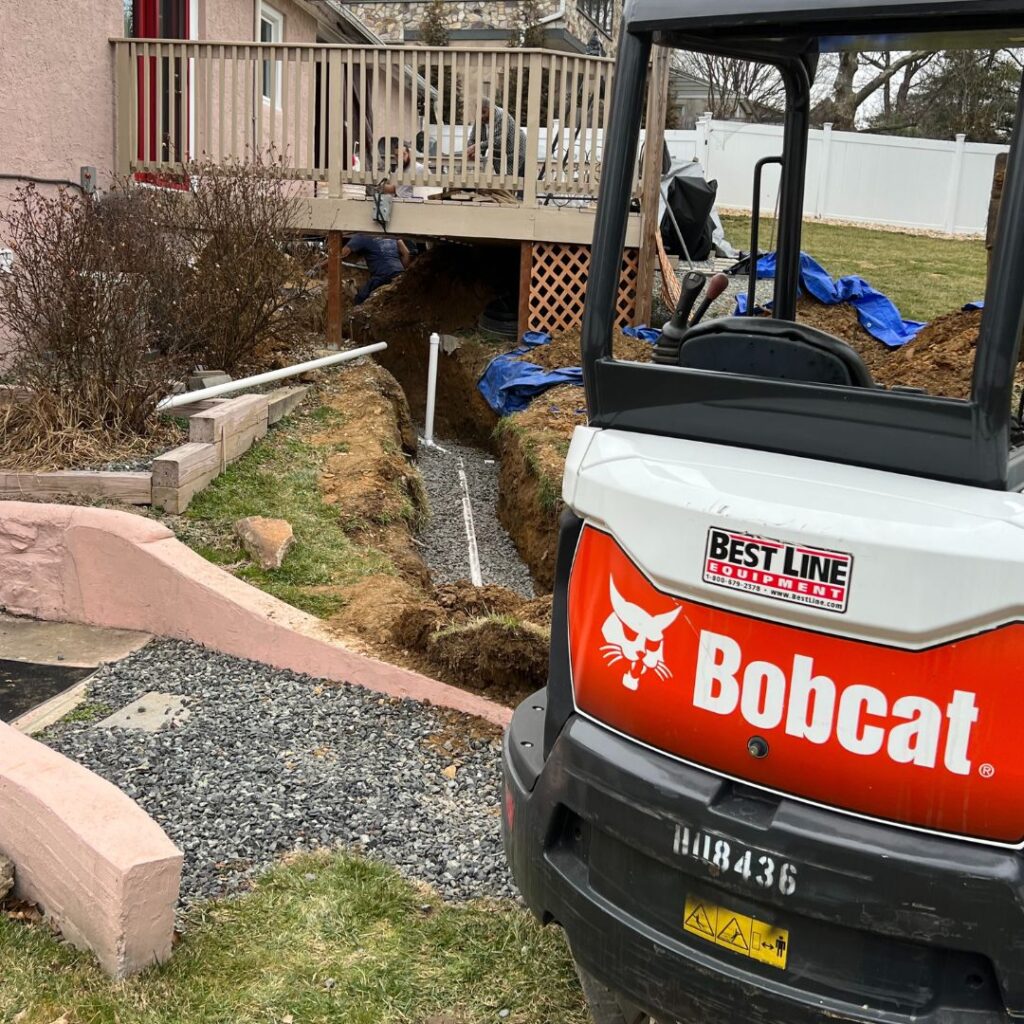
Think of a French drain as your basement’s secret weapon. This system is essentially a gravel-filled trench with a perforated pipe that redirects water away from your foundation. It collects excess groundwater before it has a chance to push against your basement walls.
If you live in a Pennsylvania neighborhood with heavy clay soil or deal with frequent downpours, a French drain can help relieve hydrostatic pressure and keep your basement dry—even during the worst storms.
2. Gutter Extensions and Downspout Redirects
It may sound simple, but this one is often overlooked. If your downspouts are dropping rainwater right next to your house, all that moisture is just seeping down into your foundation. By extending downspouts 4–6 feet away and redirecting them toward a safe drainage point—like a dry well or swale—you can keep runoff from collecting where it shouldn’t.
Add in a gutter cleaning routine and you’re giving water zero excuses to hang around.
3. Grading Your Landscape
Water follows gravity, so your yard’s slope matters—a lot. Proper grading ensures the ground angles away from your home, guiding rain and snowmelt in the opposite direction of your foundation.
This solution doesn’t require any fancy equipment—just some topsoil, a shovel (or a skid steer), and a little landscaping know-how. It’s one of the most cost-effective ways to protect your basement over the long haul.
These three exterior drainage solutions for basement waterproofing can be game-changers when it comes to moisture prevention. Sometimes, just a few smart adjustments can spare you from big, expensive problems down the road.
When to Call a Basement Waterproofing Professional
We love a good DIY project as much as anyone—but when it comes to protecting your home from serious water damage, there are times when you need to bring in the experts. Some drainage issues are just too big, too hidden, or too complex to handle with a shovel and a weekend. That’s where the right professional can make all the difference.
So how do you know when it’s time to call for backup? Here are the telltale signs that your home needs expert help with exterior drainage solutions for basement waterproofing.
1. You’re Seeing Persistent Water in the Basement
A little dampness after a storm? Maybe. But if you’re seeing standing water, stained concrete, or puddles after every rain, that’s not just a fluke—it’s a pattern. And it likely means there’s a bigger issue going on outside your home that interior fixes alone won’t solve.
A waterproofing professional can assess your property’s layout, grading, soil type, and water flow to pinpoint the problem and recommend the right exterior solution.
2. Cracks Are Forming in Your Basement Walls or Floor
Hairline cracks aren’t always a cause for panic, but when you start noticing horizontal cracks, widening gaps, or moisture seeping through, it’s time to take it seriously. These signs often point to hydrostatic pressure—when water builds up in the soil and pushes against your foundation walls.
This pressure doesn’t go away on its own. In fact, it gets worse over time. A trained waterproofing contractor can help relieve that pressure with strategic exterior drainage solutions for basement waterproofing—before those cracks turn into costly structural damage.
3. You’ve Tried Fixes That Aren’t Working
Maybe you’ve extended your downspouts. Maybe you’ve re-graded the yard. Maybe you even installed a French drain, but the water keeps coming back. If you’ve tried multiple fixes and the problem keeps reappearing, that’s a red flag that something more complex is happening underground.
Professionals use tools like laser levels, soil analysis, and drainage mapping to find what you can’t see. They know how to diagnose hidden issues like clogged footing drains, collapsed pipes, or improperly sealed foundations.
4. Mold, Musty Smells, or Allergies Are Getting Worse
Water damage doesn’t just threaten your home—it can affect your health, too. If you notice a persistent musty odor, visible mold on walls or baseboards, or if household allergies seem to be flaring up, there may be moisture lurking behind the scenes.
Professionals don’t just dry things out—they solve the source of the moisture. That’s the kind of long-term peace of mind you can’t get from a dehumidifier alone.
5. You’re Prepping to Sell or Renovate
Planning a basement remodel? Thinking of listing your home? Before you invest in flooring, drywall, or new appliances, make sure your foundation and drainage are in top shape. Water damage can scare off buyers, derail inspections, or destroy new renovations in a flash.
A professional assessment and proper exterior drainage solutions for basement waterproofing can protect your investment, boost your home’s value, and give future buyers peace of mind.
Bottom line? If you’re battling water over and over again, or you’re simply not sure where the moisture is coming from, it’s worth having a pro take a look. Pressman Home Services has seen it all—and fixed it all—right here in Pennsylvania, where wild weather can strike in any season.
Keep Water Out, Keep Peace of Mind: Trust the Pros at Pressman Home Services
Basement water problems don’t happen overnight—they build up drop by drop, storm by storm. Whether it’s poor grading, clogged gutters, or Pennsylvania’s freeze-thaw cycles pushing water straight into your foundation, one thing is clear: prevention is everything.
The smartest move you can make is tackling the problem from the outside in. Choosing the right exterior drainage solutions for basement waterproofing means protecting your home at its most vulnerable points—before damage starts. From French drains to proper grading to extending those downspouts, these fixes keep your basement dry, your foundation strong, and your family safe.
But you don’t have to figure it all out on your own. At Pressman Home Services, we specialize in solving water problems at the source. Our team knows the unique challenges that come with Pennsylvania’s weather—because we live here too. We’ve helped hundreds of homeowners throughout the region keep their basements dry and their foundations intact with long-lasting, customized exterior drainage solutions.
So if you’re seeing water stains, puddles, or just have a gut feeling something isn’t right—don’t wait for the next storm to confirm it. Let’s stop water in its tracks before it gets in.