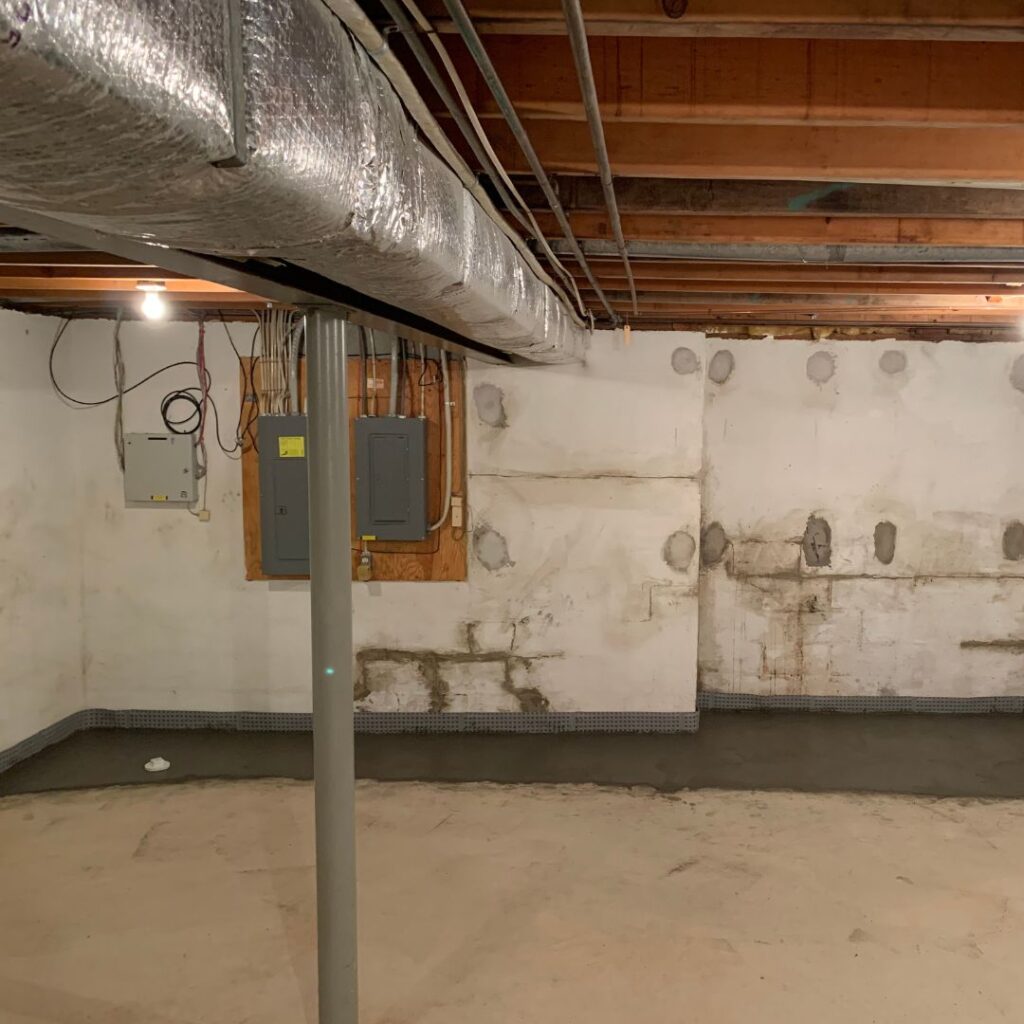
You walk downstairs and it hits you right away: that heavy, earthy, closed-up odor. You check the floor, the corners and the walls, and everything looks dry. So why does the basement smell damp? In almost every basement we inspect across Bucks County, Montgomery County and nearby New Jersey, the answer is the same. Moisture is getting in or building up somewhere you can’t easily see, and it’s feeding mildew and mold on the materials around it. You don’t need a puddle for that to happen. Damp air, slow vapor movement through concrete, or a small leak behind a finished wall is enough.
Why Your Basement Smells Damp
That damp odor isn’t the moisture itself. Water has no smell. What you’re picking up are gases released by mold and mildew as they grow and digest organic material. Those organic materials include dust, wood framing, drywall paper, cardboard boxes and the backing of carpet. When moisture levels stay high long enough, those organisms get to work, and the smell is often the first sign that they have.
That’s why a basement can smell damp long before you ever see a stain, a spot of mold or a drop of water. Your nose is detecting a moisture problem that’s already active.
Musty Smell vs. Mildew Smell vs. Mold Smell
Homeowners use these words interchangeably, but they often point to different stages of the same problem.
A musty smell in the basement is the general stale, closed-in odor that comes from high humidity and slow microbial growth spread across a space. It’s often the earliest warning.
A mildew smell is usually sharper and a bit sour, like wet towels left in a gym bag. Mildew tends to grow on surfaces such as walls, stored fabrics and the underside of shelving, and you can often wipe it away.
A mold smell is stronger and earthier, and it tends to linger even after cleaning. That usually means growth has worked its way into porous materials like drywall, insulation, ceiling joists or carpet padding. When the odor gets stronger in one particular corner or behind one wall, that’s where we start looking.
Why Concrete Basements Hold Moisture
Concrete looks solid, but it’s porous. Poured walls, concrete block and the stone foundations found in many older Pennsylvania homes all absorb water from the soil around them and slowly release it into the basement as vapor. Block walls are especially prone to this because their hollow cores can hold water and pass it through to the interior.
Basements also sit below grade, surrounded by soil that stays damp for days after a storm. The walls and floor stay cool year-round, which makes them natural spots for moisture to collect. Put porous concrete, wet soil and cool surfaces together, and you have a space that holds onto moisture even when everything looks dry.
Basement Smells Damp but No Water: 7 Hidden Causes
When a homeowner tells us their basement smells damp but there’s no water anywhere, these are the causes we check first.
High Basement Humidity
This is the most common cause by far. Humid air works its way into the basement through open windows, doors and gaps in the rim joist, and it gets trapped there. Laundry, a dryer vented poorly and a lack of air movement add even more. Once humidity sits above the healthy range for weeks at a time, mildew starts growing on every surface it can reach. You’ll often notice the smell gets worse in July and August, when outdoor air is at its most humid.
Moisture Coming Through Basement Walls
Even without visible leaks, groundwater in the soil can push vapor through concrete and block walls, especially after heavy rain or snowmelt. Often the only clues are a faint dark band along the lower part of the wall, flaking paint, or a white chalky residue. If the walls feel cool and slightly damp to the touch, moisture is moving through them, and it’s feeding that musty smell in your basement.
Condensation on Basement Walls
When warm, humid air meets cool foundation walls or cold water pipes, it condenses into droplets, the same way a glass of iced tea sweats on a summer day. The walls look like they’re leaking, but the water is coming from the air, not the ground. We cover this in more detail in our article on basement walls sweating, but the short version is this: condensation keeps surfaces wet enough for mildew to grow, and it’s a big reason basements smell worse in summer.
Hidden Leaks Behind Finished Basement Walls
Finished basements are where we find some of the worst hidden moisture problems. Drywall, framing and insulation can cover a foundation wall that’s seeping every time it rains. Because the water runs down behind the drywall and soaks into the bottom plate and carpet tack strip, you never see it, but you smell it. Swollen baseboards, soft drywall near the floor or a smell that’s concentrated in one room are all signs worth taking seriously.
Musty Smell From the Sump Pump Pit
An open sump pit is a direct connection to the wet soil under your house. If your pit doesn’t have a sealed lid, damp air, and sometimes earthy odors, rise straight into the basement. Sediment and stagnant water at the bottom of the pit can also grow bacteria and produce a sour smell. A tightly sealed, airtight lid makes a noticeable difference in a lot of the homes we visit, and it’s also safer for kids and pets.
Musty Smell in Basement Carpet and Storage
Basement storage is often the hidden source of the odor itself. Cardboard boxes, old clothing, books, upholstered furniture and carpet all absorb moisture from humid air and give mildew a place to grow. Carpet laid directly on a concrete slab is a common culprit, because the slab stays cool and wicks moisture into the padding. If the smell gets stronger when you open a box or lift a corner of the rug, you’ve found part of the problem.
Musty Smell From a Crawl Space
Many homes in our area have a basement connected to a crawl space, often in an addition or a split-level layout. Crawl spaces with dirt floors, no vapor barrier or poor ventilation can be very damp, and that air flows straight into the basement and the rest of the house. If the musty smell seems strongest near the crawl space access, that’s a good place to start.
Why Basements Smell Musty in Bucks and Montgomery County
Local conditions make damp basements especially common here. Much of Bucks County sits on clay-heavy soil that holds water and drains slowly, so foundations stay surrounded by wet ground long after a storm passes. You can read more about Bucks County soil conditions and how they affect basements.
Housing stock plays a role too. Older homes in towns like Doylestown, New Hope and parts of Montgomery County often have fieldstone foundations with no exterior waterproofing at all. Many postwar neighborhoods were built with concrete block walls that pass moisture easily.
Then there’s the weather. Humid summers, heavy spring rains and freeze-thaw cycles in winter keep foundations under steady moisture pressure for much of the year. That combination is exactly why we see so many basements that look dry and smell damp.
How to Find the Source of a Musty Smell in Your Basement
Before you fix the smell, you need to know where the moisture is coming from. These steps will narrow it down.
What Humidity Should a Basement Be?
Start with an inexpensive digital hygrometer. The U.S. Environmental Protection Agency’s guide to mold and moisture in the home recommends keeping indoor relative humidity below 60%, and ideally between 30% and 50%. In a basement, we suggest aiming for about 45% to 50%. Check readings at different times of day and after rain. If your basement regularly sits above 60%, humidity is almost certainly feeding the smell, either on its own or alongside another source.
Condensation or Seepage? The Plastic Sheet Test
This simple test tells you whether the moisture on your walls or floor comes from the air or the ground. Tape a square of clear plastic, about two feet by two feet, tightly to the foundation wall or slab, sealing all four edges. Leave it for 24 to 48 hours.
- Moisture on the room side of the plastic points to condensation from humid air.
- Moisture underneath the plastic, against the concrete, means water vapor is coming through the foundation from the soil.
- Moisture on both sides means you have both problems, which is more common than many people expect.
Signs of Mold You Can’t See
Mold often grows in places you don’t look. Check the backs of stored boxes and furniture, the underside of stair treads, inside wall cavities near the floor, behind the water heater, and along the rim joist where the floor framing sits on the foundation. Look for dark spotting, fuzzy patches, stained drywall paper and peeling paint. Also pay attention to people in your home. Stuffiness, sneezing or allergy symptoms that get worse in the basement are worth noting.
How to Get Rid of a Musty Smell in Your Basement
Air fresheners and odor sprays only cover the smell for a few hours. To truly fix it, you have to remove the moisture, clean what’s growing, and stop the moisture from coming back.
Best Dehumidifier Setting for a Basement
For most basements, set the dehumidifier to between 45% and 50% relative humidity. Going much lower makes the machine run constantly without much added benefit. Choose a unit sized for your space; undersized units are one of the most common reasons we see dehumidifiers fail to keep up. If you can, use a continuous drain hose instead of emptying a bucket, so the unit never shuts off when the tank fills. Keep basement windows and doors closed while it runs, especially in summer, or you’ll be drying out the outdoors.
How to Clean a Musty Basement
Once humidity is under control, clean out the sources of the odor:
- Throw out soggy cardboard and move storage into sealed plastic bins, raised off the floor on shelving.
- Wash or discard musty fabrics, and pull up carpet that’s been sitting directly on the slab if it smells.
- Scrub hard surfaces with detergent and water, then dry them completely.
- Clean and seal the sump pit.
For small spots of surface mildew, this is reasonable DIY work. The EPA’s mold guidance suggests that if a moldy area is larger than about 10 square feet, or if mold is inside walls or HVAC ductwork, it’s time to bring in a professional. Our mold removal process includes inspection, containment, removal and correcting the moisture that caused it.
Permanent Fixes for a Damp-Smelling Basement
If moisture keeps coming through the walls or floor, a dehumidifier will only manage the symptom. The lasting fix is to control the water before it reaches the basement. Depending on what we find, that can mean:
- Interior waterproofing: a perimeter drainage system along the inside of the foundation that collects water and sends it to a sump pump.
- A sealed sump pump system with an airtight lid.
- Wall vapor barriers to keep foundation moisture out of the living space.
- Exterior improvements such as better grading and properly extended downspouts.
At Pressman Home Services, our owners are onsite for every job and we don’t use subcontractors. That means the people diagnosing your basement are the same ones fixing it, and the goal is to do it right the first time.
Basement Smells Like Sewage? That’s a Different Problem
Not every basement odor comes from moisture. If the smell is closer to rotten eggs, sulfur or sewage than to damp earth, the source is usually the plumbing: a dried-out drain trap, a cracked drain line or a sewer problem. That’s not something waterproofing will fix. If your basement smells like sewage, our sister company, Pressman Plumbing, handles those issues. Sewer gas can also be a safety concern, so it’s worth having it checked promptly rather than waiting.
Frequently Asked Questions
Is a musty smell in the basement dangerous?
The smell itself isn’t toxic, but it signals mold or mildew growth, which can trigger allergies, asthma flare-ups and respiratory irritation in sensitive people. It also means moisture is active and can slowly damage wood framing, drywall and stored belongings. The sooner you find the source, the smaller the problem tends to be.
Why does my basement smell worse after it rains?
Rain saturates the soil around your foundation, which raises moisture pressure against the walls and floor. More water vapor moves through the concrete, and humidity in the basement climbs within a day or two. If the smell reliably spikes after storms, groundwater is likely part of the cause, not just indoor humidity.
Why does my basement smell musty in the summer?
Summer air in Pennsylvania and New Jersey holds a lot of moisture. When that warm air reaches cool basement walls and floors, it condenses, and relative humidity rises sharply. Opening basement windows to “air it out” often makes the problem worse, because it lets in even more humid air.
Get Rid of the Damp Basement Smell for Good
When your basement smells damp, it’s telling you something real: moisture is building up somewhere, even if you can’t see it. Start by measuring humidity, running the plastic sheet test and clearing out damp storage. If the smell comes back, or if moisture is coming through your foundation, it’s time for a lasting solution rather than another air freshener.
If you’d like an honest assessment from people who will actually be in your basement, get in touch with our team through our contact page. We’ll find where the moisture is coming from and explain the right fix for your home.